Pennsylvania has a new state-record channel catfish: 36 pounds, 2 ounces, caught just after 8 p.m. on October 3, 2026, below the Highland Park Lock and Dam on the Allegheny River near Sixmile Island. It broke a record that had stood since 1991, a fish from the Lehigh Canal in Northampton County, by nine ounces. The fish measured 42 inches long with a 26-inch girth.
The detail that matters most for the rest of us is where it was caught, not how big it was. Below a lock and dam, at night, in early October. That is not luck. That is the textbook big-river fall catfish setup, and it works on rivers far from Pittsburgh.
How it was caught
The angler, David Taylor Jr. of Munhall, was fishing the Tri-State Hawg Hunters tournament with a friend from an 18-foot boat. The rig was simple: a heavy-duty baitcasting rod, a Carolina rig on 40-pound monofilament, a 10/0 circle hook and a chunk of cut mooneye for bait. He first took it for a blue catfish; counting the anal-fin rays settled it, since channel cats have fewer than 30 and this one had 26. A Fish and Boat Commission waterways conservation officer witnessed the official weigh-in on a certified scale the next morning, and the fish was released alive. In Pennsylvania only weight counts for a record, and the fish has to be weighed on a certified scale and inspected by commission staff before it is released.
His own advice after the fact: pay attention to your tackle, keep your line strong and your hooks sharp, because the moment you need them is the one you did not plan for.
Why tailwaters hold big cats in the fall
A lock and dam does three things that catfish care about, and all of them get more important as water cools.
It concentrates food. Baitfish moving downstream get disoriented, injured or killed going through the structure, and current carries them into predictable seams below it. Shad and other forage fish school up in fall, and the tailwater becomes a conveyor belt. A big channel cat does not have to hunt hard below a dam. It has to sit in the right place.
It oxygenates water. Turbulence below the dam mixes oxygen into the river, which matters less in October than in August but still draws fish to the area through the transition.
It creates current breaks. The scour hole directly below the structure, the edges of the main current, wing walls and eddies all give a heavy fish a place to hold out of the full flow while food comes past. The fish that win the best spots are usually the biggest ones.
Fall adds one more factor: catfish feed heavily ahead of winter, when cold water slows their metabolism. The weeks when water temperature drops through the 60s are when a lot of the year's largest cats are caught, and night fishing tends to be best because big fish move shallower and feed more aggressively after dark.
How to fish a tailwater
Respect the restricted zone. Every lock and dam has a posted restricted area immediately above and below it, and the water there is dangerous. Fish the edges of the scour hole and the seams downstream, not the boil.
Anchor upstream of the spot, not on it. Set up above the seam you want to fish and let your bait sit at the head of it. Fish below a dam typically face upstream into the current, so a bait that settles just above them is the one they find.
Use a Carolina rig and enough weight to hold. The record came on the most basic rig in catfishing for a reason: a sliding sinker lets a fish pick up the bait without feeling resistance, and the leader keeps the bait off the bottom just enough. In heavy current you may need several ounces to hold bottom. Circle hooks set themselves as the fish turns; do not swing on them, just let the rod load.
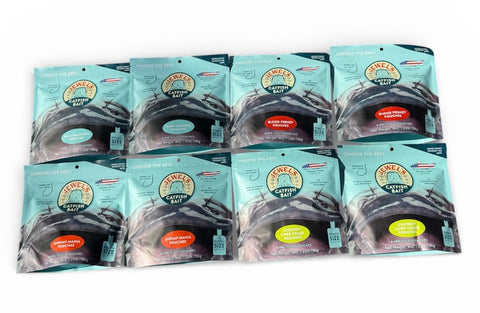
Use fresh cut bait from the same river. Cut shad, skipjack, mooneye or suckers caught where you are fishing match what the cats are already eating. Fresh, oily bait outperforms frozen almost every time.
The rod and reel
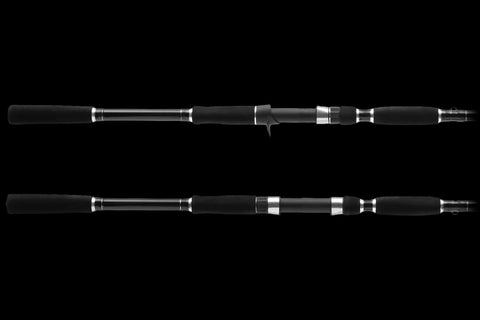
A big-river catfish rig asks two things of a rod: enough backbone to throw and hold heavy weight in current, and enough length to keep line off the rocks and steer a heavy fish away from the structure. A 7-foot medium-heavy bass rod will fold under it.
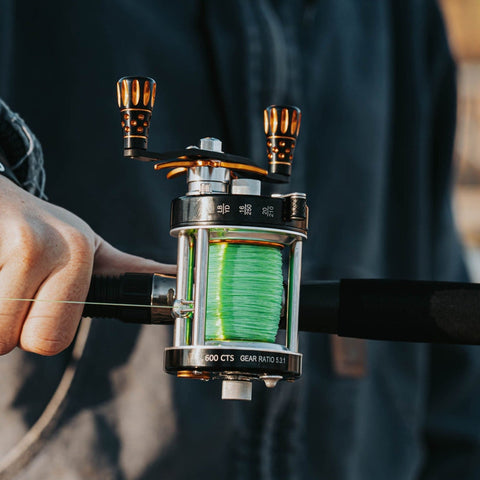
We do not carry a dedicated catfish rod, and we will say so plainly. The closest honest fit in our lineup is Kistler's Helium in a heavy or extra-heavy power, which Kistler builds for heavy work like punching and big worms; for the heaviest sinkers in strong current, the 7-foot-10 Big Country extra-heavy is rated by Kistler for 4- to 10-ounce swimbaits, which gives it the backbone for heavy sinkers in strong current. Pair either with a reel that has real drag; Kistler's PRC casting reel is rated to 25 pounds. You can see the rest of the Kistler line in Kistler fishing rods. We have not fished these for catfish ourselves; we are matching their published specifications to what the job requires.
Local variation
The same pattern works on the Ohio, the Mississippi, the Tennessee and the Red, and below smaller low-head dams on lots of mid-sized rivers. Blue catfish are expanding into rivers where they were not historically common, which is part of why the record angler thought he had a blue. In tidal waters of the Chesapeake, invasive blues are a problem bad enough that Maryland is paying anglers to remove them.
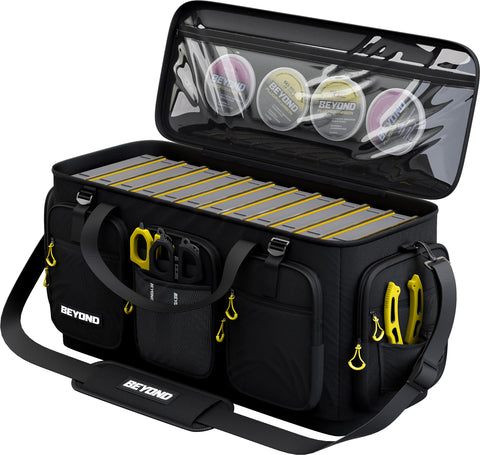
For warm-weather patterns, see our summer bass and catfish guide. For keeping a tailwater box organized so you are not digging for sinkers in the dark, this tackle system helps. And if you keep a few smaller channels for the table, our fried fish batter was written with them in mind.
Sources: Pennsylvania Fish and Boat Commission news release (Oct. 21, 2026); WPXI; Wired2Fish.