Walk any launch ramp at 5:30 a.m. and you will hear the same argument you have heard for thirty years: spinning reel or baitcaster, which one is better? Wrong question. Neither is better. They are two different tools built for two different jobs, and the angler who out-fishes you is not the one with the fancier reel — it is the one who knows which reel to pick up before the trolling motor even hits the water. This guide is going to teach you to make that call yourself, every time, by reading five things: lure weight, line, wind, the fish you are chasing, and your own honest tolerance for picking out a backlash. Get those five right and the “debate” disappears.
First, stop asking which is better — ask which is right for the job
Here is the diagnosis before the prescription. A spinning reel hangs under the rod on a fixed spool that never rotates while you cast. Line simply peels off the lip in coils. Because nothing is spinning, there is almost nothing to overrun — that is why it is nearly impossible to backlash and why it throws light lures a mile. A baitcaster sits on top of the rod on a rotating spool. The lure has to physically spin that spool to pull line, and your thumb governs how fast it turns. That rotation is the source of both its power and its punishment: total casting control when you get it right, a bird’s nest when you do not.
So the real question is never “which reel is superior.” It is: does this specific cast reward a fixed spool or a rotating spool? Answer that and you have your reel. The next sections give you the five reads that answer it.
Read #1: Lure weight (the tie-breaker that settles most arguments)
This is the single most reliable read, so start here. A rotating spool has mass, and a light lure does not have enough momentum to keep a heavy spool turning smoothly — the spool outruns the lure and you get slack, then a nest. A fixed spool does not care; the line just falls off the lip.
- Under 1/4 oz — go spinning. Drop shots, Ned rigs, 1/16-oz shaky heads, small jerkbaits, trout spinners, panfish jigs. A baitcaster will fight you the whole day at these weights.
- 1/4 to 3/8 oz — it is a coin flip that tips on the other four reads (mostly cover and wind).
- 3/8 oz and up — go casting. Full-size spinnerbaits, 1/2-oz jigs, deep crankbaits, frogs, big swimbaits. The heavier the lure, the more a baitcaster outshines a spinning reel on control and power.
The exception every experienced angler should know about is a BFS (Bait Finesse System) setup — a shallow, ultralight spool tuned to throw 1/16 to 1/8 oz on a baitcaster. It is a specialist tool, not a starter one, and something like the LUNKERSTICK BFS Series rod exists precisely so a skilled caster can flip finesse baits with a baitcaster’s accuracy. If you are still reading backlashes with a thumb, that is not your reel yet — earn it first.
Read #2: Line — braid, mono, and fluoro behave differently on each reel
Line choice both drives the decision and follows from it. Match it wrong and even the right reel underperforms.
On a spinning reel, limp line is your friend. Braid (say a no-stretch 10–20 lb) lays on a fixed spool beautifully and casts light baits into the next zip code; run a 2–3 ft fluorocarbon leader for invisibility and abrasion. Straight fluorocarbon is stiff and springs off a spinning spool in loops — keep heavy fluoro off spinning gear. When you buy braid, look for a round-profile 8-strand rather than a cheap flat 4-strand; the rounder cross-section lays smoother on a fixed spool and digs into itself less under load.
On a baitcaster, heavier and stiffer line is an asset. A rotating spool loves 12–20 lb fluorocarbon or heavy braid — the diameter fills the spool and the stiffness resists the slack that causes overruns. This is why bass anglers run 15–20 lb fluoro on a casting reel for jigs and cranks, and 30–65 lb braid for frogs and heavy cover. Try to spool a baitcaster with 6 lb mono for finesse and you will hate your life.
One practical note on where to buy any of it: Venator does not sell fishing line or leader. No braid, no monofilament, no fluorocarbon, in any test. It is a category we do not carry and nothing in our lineup substitutes for it — spool up at a tackle shop, then come back here for the rod and the reel that have to live with it.
Read #3: Wind — the read most people ignore until it ruins their day
Wind is the great equalizer, and it favors the fixed spool. A baitcaster’s spool is exposed to the breeze, and a gust that slows your lure while the spool keeps spinning is the number-one cause of a wind knot nest. A spinning reel, with no spinning spool to overrun, shrugs off a headwind.
The rule: the harder and gustier the wind — think open bays, jetties, big-water bass in a chop — the more a spinning reel earns its keep, especially with lighter baits. On a dead-calm morning you can get away with a baitcaster and a lighter lure than you normally would. Read the flag before you tie on.
Read #4: Target species — where each reel actually wins
Now cash the mechanics out into the fish you actually chase.
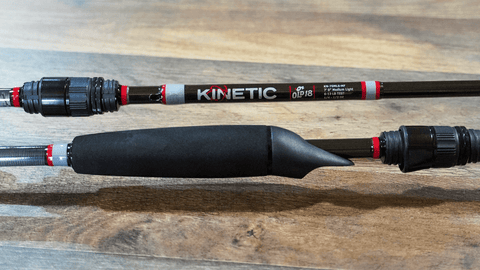
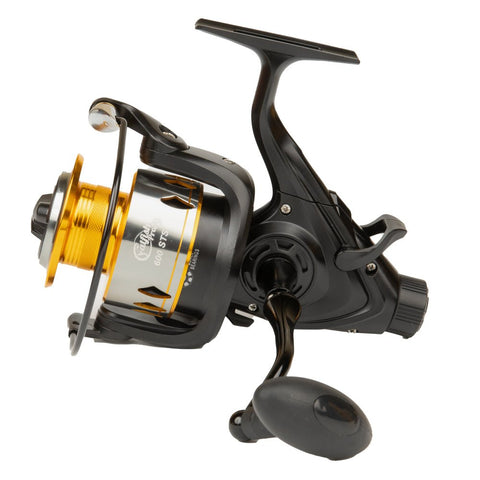
Largemouth & smallmouth bass (finesse): spinning, all day. Drop shot, Ned rig, wacky-rigged senko, spy-baiting — light line, light lure, spinning reel. The Kinetic 7'0″ Medium-Light Spinning, Mod-Fast paired with a smooth 2500-size reel such as the 600STS Spinning Reel is the finesse workhorse.
Bass (power & cover): baitcasting. Flipping a jig into a laydown, punching mats, throwing a frog over hydrilla, winching a big swimbait — you want a rotating spool and a stout rod, and the Kinetic 7'3″ Medium-Heavy Casting, Fast is the stick for it. On the reel, most anglers default to a low-profile baitcaster, and that is a fair call for all-day palming comfort. A round reel like the Fishing for Fun Round Baitcaster Reel gives up some of that comfort in exchange for more line capacity and a bigger drag stack — worth a look if your cover work runs to heavy line and big fish.
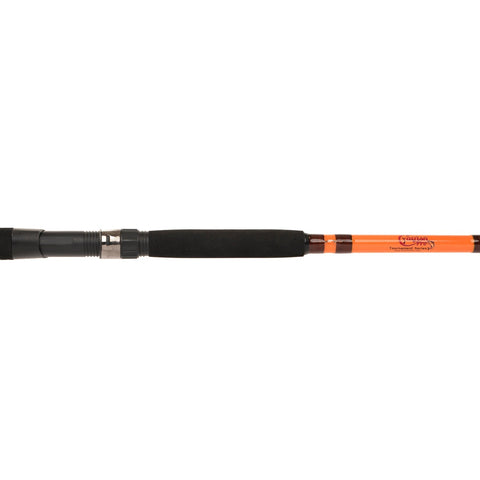
Inshore saltwater (redfish, trout, flounder): spinning dominates the wade-fishing world — it handles wind, light jigs under a popping cork, and long searching casts, and it rinses out easy. Step up to the longer Magictail Inshore 7'6″ Spinning, 2–6 oz when you are throwing bigger topwaters for gator trout or reaching across current for a bull red — the extra length buys casting distance and line pickup on a long hookset.
Catfish & big blues: here the round baitcaster earns a spot. For channel cats and blues under about 30 lb, a heavy spinning outfit is plenty. For trophy flatheads and blues past 40 lb, you want the line capacity, drag, and clicker of a round reel — something like the 600CTS Round Baitcaster Reel, built for hauling weight out of current.
Panfish, trout, beginners: spinning, no debate. Ultralight, forgiving, cheap to get into, catches everything.
Read #5: Your honest backlash tolerance
Be real with yourself. A baitcaster rewards reps and punishes impatience. If you fish six times a year and want to catch fish, not practice casting, a spinning reel will out-fish a baitcaster in your hands every time. If you are willing to spend an hour in the yard eating backlashes to earn tournament-grade accuracy, the baitcaster pays you back for the rest of your life. Neither answer is wrong — but lying to yourself about which angler you are is how you end up with a $200 reel gathering dust.
The 10-second decision table
| The situation | Pick up |
|---|---|
| Lures under 1/4 oz, finesse, live bait | Spinning |
| Lures 3/8 oz and up, jigs, frogs, swimbaits | Casting |
| Windy day, open water, long casts | Spinning |
| Pitching and flipping tight cover | Casting |
| Inshore wade fishing, popping cork | Spinning |
| Trophy catfish, heavy line, current | Round baitcaster |
| Beginner or all-species one-rod kit | Spinning |
| Maximum casting accuracy on heavy baits | Casting |
If you own exactly one setup and chase a mix of species, buy spinning — it does 90% of jobs at 100% forgiveness. Browse the full rod and reel lineup or the Kistler rod lineup when you are ready to build a proper two-rod arsenal.
Match the gear ratio to the technique (the spec most people skip)
Picking the reel type is half the job; the gear ratio decides how it fishes. Ratio is how many times the spool turns per handle crank — and it directly sets how fast you pick up line (IPT, inches per turn).
- Slow, 5.1:1 to 5.4:1 — deep crankbaits and big-lipped baits, where you want torque and a slower retrieve to keep the bait in the strike zone.
- All-around, 6.3:1 to 7.1:1 — the do-everything range for jigs, spinnerbaits, and most soft plastics. If you buy one baitcaster, buy something near 7:1.
- Burner, 8.1:1 and up — buzzbaits, frogs, and any technique where you have to catch up to a fish fast or pick up slack to set the hook.
For spinning reels, think in sizes: a 1000–2500 covers panfish, trout, and bass finesse; a 3000–4000 handles inshore reds, bigger swimbaits, and light surf; a 5000-plus goes to catfish and heavy saltwater. Match line capacity to species and you are done.
The mistakes I see most (fix these first)
- Throwing finesse baits on a baitcaster because it looks pro. You are fighting physics. Put the 1/8-oz shaky head on spinning gear and out-fish the guy nesting his reel.
- Running straight fluorocarbon on a spinning reel. It coils off the spool and tangles. Go braid-to-fluoro-leader instead.
- Setting the brakes and forgetting the spool-tension knob. Two different systems. Tension knob first (lure free-falls slow and stops), brakes second.
- Buying a burner 8:1 reel for deep cranking. Wrong tool — you will pull the bait out of the zone and wear out your arm. Match ratio to technique.
- Owning one reel and forcing it into every job. The one-reel angler loses fish the two-reel angler never even knew were biting.
Kill the bird’s nest: the hour that fixes your baitcaster forever
Every caster nests the first 50 throws. Here is the drill that compresses that learning curve into one backyard session:
- Set the spool-tension knob. Tie on a 3/8-oz casting plug, hold the rod tip up, thumb off the spool. The plug should fall slowly and stop the instant it hits the ground with no extra spool spin. If it accelerates or keeps turning, tighten the knob.
- Crank the brakes to 70–80% to start. You will lose a little distance and gain a lot of clean casts. Back the brakes off a notch at a time as your thumb learns.
- Feather the spool on every cast, not just at splashdown. Light thumb pressure throughout, then stop the spool the moment the lure lands. The thumb is the brain of the reel.
- Practice with a target, not for distance. Set a bucket at 30 ft and skip to it. Accuracy is the baitcaster’s whole reason to exist.
An hour of dry-land reps saves you a ruined morning on the water. If you want an all-in-one way to start, a matched 600CTS round baitcaster rod-and-reel combo takes the guesswork out of pairing.
Frequently Asked Questions
Is a baitcaster harder to use than a spinning reel?
Yes, but only at the start. Expect backlashes for the first 50-odd casts. Set the spool-tension knob so a 3/8-oz lure free-falls slowly, run the brakes at 70–80% to begin, and feather the spool with your thumb on every cast. Within a season of weekend trips most anglers cast a baitcaster more accurately than a spinning reel. The learning curve is real but short.
What line should I use on a spinning reel versus a baitcaster?
On a spinning reel, run braid (10–20 lb) with a 2–3 ft fluorocarbon leader, or light mono — limp line behaves on a fixed spool, while stiff straight fluoro coils off it. On a baitcaster, heavier and stiffer line is an asset: 12–20 lb fluorocarbon for jigs and cranks, and 30–65 lb braid for frogs and heavy cover.
What reel size and gear ratio should I use for bass fishing?
For spinning, a 2500–3000 size with 6–10 lb fluorocarbon or 10–15 lb braid covers most finesse work; step to a 4000 for larger swimbaits. For baitcasters, a low-profile reel in the 6.3:1 to 7.1:1 range handles the widest range of techniques, an 8.1:1 burns topwaters and frogs, and a slower 5.4:1 is better for deep crankbaits.
Can I use a spinning reel for catfish?
Yes. For channel cats, drum, and blues under about 30 lb, a heavy-action spinning outfit is plenty. For trophy flatheads and blues over 40 lb, the line capacity, drag, and clicker of a round baitcaster is the better tool for hauling weight out of current.
Do I really need both a spinning reel and a baitcaster?
If you fish more than a few times a year, eventually yes. A well-rounded angler runs one spinning combo for finesse and one baitcasting combo for power. The cheat code: buy them in the same rod length and similar action so muscle memory transfers between them.
Your move this week
Do not overthink it — go do the reps. Grab whichever baitcaster you own (or a matched combo), tie on a 3/8-oz plug, set the tension knob and brakes as described above, and put in 30 minutes skipping at a bucket in the yard. Then, before your next trip, look honestly at what you actually throw most: if it is light finesse baits and windy water, build around a bass-fishing spinning setup; if it is heavy cover and big baits, lean into a casting outfit. Pick the reel for the job, not the argument at the ramp, and you will feel the difference by the third cast.
Fishing the salt? Keep going: our guide to lures vs. live bait on the Texas coast and our Texas Gulf Coast wade-fishing and waders guide will round out your inshore kit — and if you are chasing the most reel-punishing fish in the state, read how to chase silver kings (tarpon). Building a saltwater arsenal from scratch? Start in the saltwater-fishing collection.