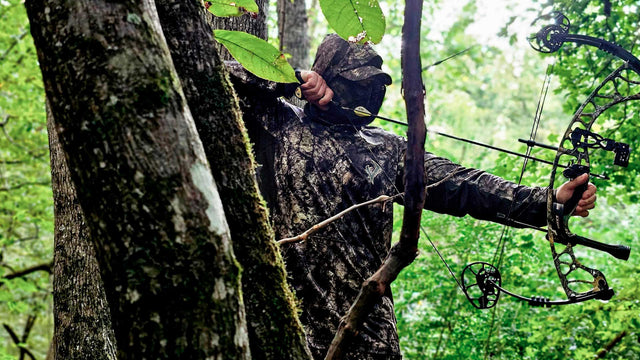
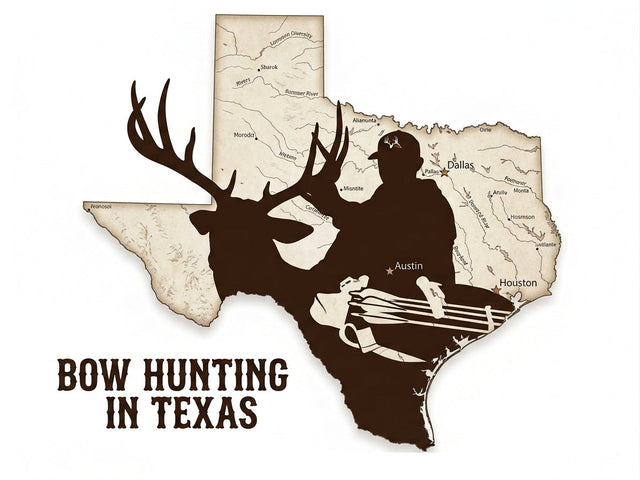
Texas archery season opened October 3 and runs through November 6. The general season starts November 7. In between those dates, a lot of Texas bowhunters are discovering that the stand they hung in August is in the wrong place. Deer moved when the acorns dropped, the feeder pattern changed, or the wind kept swinging the wrong way. The hunters who adjust fastest are the ones whose setup is light enough to move. If you are trying to work out where they went, late-October scrape sign is the cheapest read available right now.
That is the real case for a mobile ground blind, and it is a narrower argument than the usual "ground blind versus tree stand" fight. This guide covers who a two-blind panel system fits, who it does not, and what to check before you spend $290 on one.
What the numbers say about Texas this fall
TPWD's 2026-27 outlook, reported October 5, puts the statewide whitetail herd at an estimated 5.64 million after three straight years of above-average fawn survival. The Edwards Plateau holds the largest regional herd at about 1.97 million deer. The Cross Timbers is second at 924,242, and the South Texas Plains holds about 478,000, with a reputation for mature bucks. TPWD expects a strong harvest and slightly above-average antler growth in most regions.
Season dates for most counties (confirm your county in the TPWD Outdoor Annual): archery October 3 to November 6, youth-only October 30 to November 1, and general season November 7 to January 3 in the North Zone or January 17 in the South Zone. Every state's openers are collected in 2026-27 season dates by state. A high-density herd means more deer movement to read. It also means more hunters on the same properties, so the setup that gets you into the right corner of a field quickly matters more than the one that is already hanging in the wrong tree.
The safety argument most blind articles skip
The most widely cited tree-stand figure comes from a Deer & Deer Hunting survey published in 2008: more than one in three hunters who use elevated stands will eventually fall. About 3 percent of fallers, roughly one in a hundred stand users, suffer permanently crippling injuries. In that survey, 66 percent said they never wear a safety device while climbing or descending. Treat these numbers with care. The survey was not a scientific study, respondents were self-selected, and it only counted survivors. No one has published a clean head-to-head dataset on blind versus stand harvest rates, and we looked. What the survey does show is where the risk concentrates: the climb, not the sit.
A ground blind removes the climb. If you are hunting alone, hunting in your sixties, or hauling a kid along, that alone can justify the purchase. Venator does not sell tree stands, so we have no reason to oversell this point, but we would not skip it either.
What a mobile panel system actually does
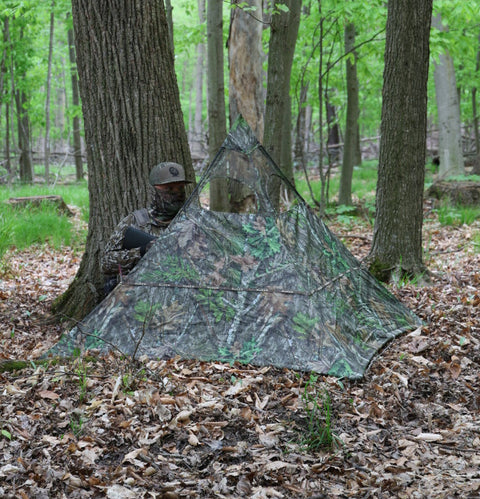
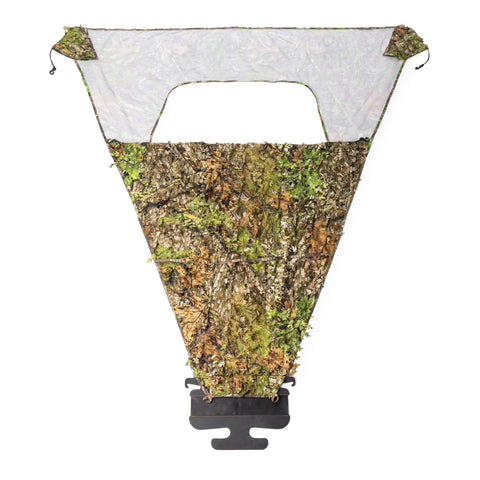
The Nukem Double Up System is two Grab & Go blinds plus a connecting panel. According to the manufacturer's specifications, the Regular size spans over 9 feet, the XL over 11 feet, and the whole kit weighs under 8 pounds. It is built from 75-denier double-sided camo nylon with a mesh top, shooting windows, stubble straps and stake loops for brushing in, and a shoulder-strap carry bag. Stand two systems back to back and you have an A-frame for a field edge.
Think about what that weight and footprint allow:
You can move between sits
Under 8 pounds means you can carry it a half-mile to a different corner of the lease without thinking about it. For a hunter who scouted with a trail camera and sees the deer shifting, the ability to set up in a new spot at 3 p.m. is the whole point.
Two or three hunters fit
The panel is designed for 2 to 3 hunters, which makes it a practical option for a parent and a youth hunter during the October 30 youth-only weekend. Our guide to setting up a kid's first deer hunt covers the rest of that weekend.
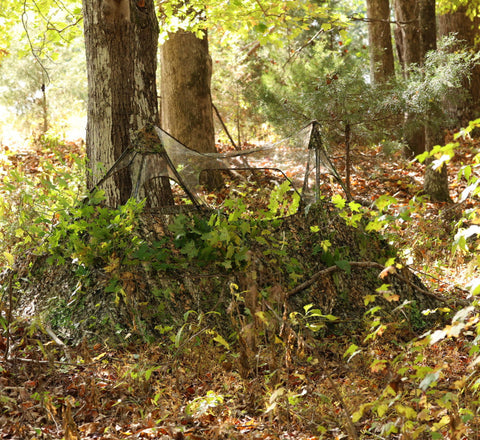
Brush it in
No pop-up blind disappears on bare ground. The stubble straps and stake loops exist so you can add native cover. Do that, and do it early in the afternoon, not at last light.
Regular or XL: pick on how you hunt
The listing is explicit. The Regular is designed to sit on the ground up to a low-profile seat. The XL sits you up to chair height. If you shoot a compound and need room to draw while seated, the XL at $339.99 is the safer choice, because headroom is the most common reason a bowhunter regrets a blind. If you are a rifle or muzzleloader hunter shooting from a low seat, the Regular at $289.99 does the job and saves $50. As of this morning, 217 Regular kits are in stock and 20 XL kits remain, so if you want the XL for the rut, do not wait on it.
What we do not know
Venator has not field-tested this blind, and it has no customer reviews yet. We carry it because its specifications fit the run-and-gun hunter we built the store for, not because we have a season of data on it. Before you buy, check three things: the shooting window height against your draw length or rifle rest, the fabric color against the cover where you hunt, and your property's rules about leaving a blind overnight.
A simple kit that makes sense
If you are buying one thing this fall, buy the system. If you want to hang a camera over the blind location first, a cellular trail camera such as the Bushnell Cellucore 20 Dual SIM Solar makes it a scout-and-sit setup: the camera tells you where to put the blind, and the blind lets you put it there.
Shop the blind: Nukem Double Up System, Mossy Oak Obsession 3D Leafy (Regular $289.99, XL $339.99). Need only one? The single Grab & Go blind starts at $109.99, and the full hunting blinds collection has the rest.
FAQ
When does Texas archery deer season end?
November 6, 2026 in most counties. The general season opens November 7.
Can I use a ground blind during the general season?
Yes, on land where blinds are allowed. Public areas often have rules on leaving blinds unattended, so check the specific area.
How many hunters fit in the Double Up System?
The manufacturer lists it for 2 to 3 hunters.
Is a ground blind safer than a tree stand?
It removes the climb, which is where most elevated-stand falls start, but it carries its own risks, including limited visibility and a blind between you and other hunters. Wear blaze orange where required.