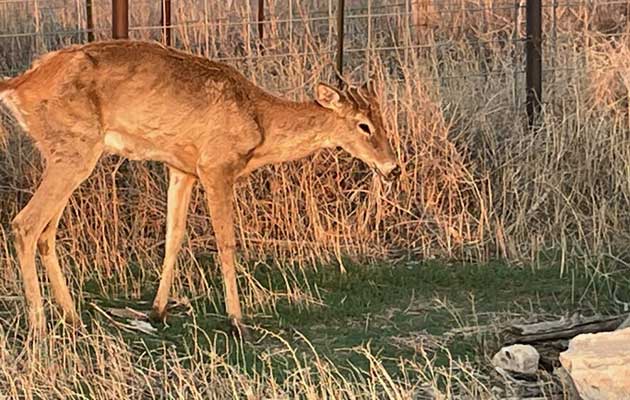
Missouri just removed antler-point restrictions from the last 18 counties that still had them, erased its CWD management zones entirely, cut nonresidents from two antlered bucks to one, and moved the early youth portion a week earlier to October 24-25. All of it lands this season. If you hunt Missouri, or you hunt a state whose commission watches Missouri, this is the most consequential deer-regulation package of 2026.
The changes come from the Missouri Department of Conservation's 2026 regulation package. Here is the whole list, then the argument underneath it.
Every change, in one table
| What changed | Detail |
|---|---|
| Antler-point restriction | Eliminated in the final 18 counties where it still applied |
| Nonresident buck limit | Two antlered bucks down to one. Nonresident landowner permits keep the limit of two. |
| CWD Management Zones | Eliminated. Most counties now have a confirmed case or sit within 10 miles of one. |
| Mandatory CWD sampling | Statewide sampling replaced by a four-year county rotation. This season: 28 counties, Nov. 14-15. |
| Early youth portion | Moved a week earlier to Oct. 24-25, to avoid the Halloween conflict |
| CWD firearms portion | Removed as a separate season segment |
| CWD management permits | Minimum raised to 20 contiguous acres in Core Areas; five no-cost permits to qualifying landowners |
| Post-season targeted removal | Discontinued. MDC will rely on hunter harvest during the regular season. |
Killing an antler-point restriction to fight a disease
This is the part that will be argued about in trucks for the next decade, and it deserves both cases stated properly.
An antler-point restriction exists to protect yearling bucks. Make a hunter count points before he shoots and most 1.5-year-olds walk, which pushes a share of them into the 2.5 and 3.5-year-old classes. That is the mechanism behind every APR adopted in the last thirty years, and it works — it is close to the only lever in deer management that reliably changes buck age structure.
MDC's stated reason for deleting it is that the same yearling bucks are the animals that move chronic wasting disease across long distances. Yearling males disperse. They are the age class most likely to pick up a prion and walk it ten or twenty miles into a herd that did not have it. A rule that protects them is, in a state where CWD is now nearly everywhere, a rule that protects the disease's best courier.
The counterargument is not a strawman either. A hunter in those 18 counties spent years watching the rule do exactly what it was sold to do, and is now being told to shoot the small ones again on the strength of a transmission model — one that assumes the harvested yearling would otherwise have dispersed, and that the disease's spread is dominated by that pathway rather than by contaminated ground, carcass transport, or the animals already there. Nobody has published a study showing that removing an APR measurably slowed CWD in a wild herd, because nobody has run that experiment. Missouri is running it now, in daylight, which is more than most states do.
Both things are true. Age structure will get worse in those counties. Whether disease spread gets better is a hypothesis with a several-season test attached to it. We wrote up the same tension from the other direction when Michigan went the opposite way and capped Lower Peninsula hunters at one buck starting in 2027.
Erasing the zones is an admission, and a simplification
A CWD Management Zone is a line on a map that tells you where the extra rules apply. Missouri drew those lines when the disease occupied a handful of counties. It is deleting them because most counties now hold a confirmed case or fall within ten miles of one, which makes the line a distinction without a difference.
That is a genuinely useful simplification — a hunter no longer has to work out which side of an invisible boundary his lease sits on — and it is also an agency saying out loud that the containment phase is over in most of the state. Read it as both.
The same logic runs through the rest of the package. Dropping the separate CWD firearms portion and ending post-season targeted removals both shift the workload onto ordinary hunters during the ordinary season. That is cheaper, it is less politically fraught than agency sharpshooters on private ground, and it depends entirely on whether hunters actually pull the trigger.
The two dates to put in your phone
Nov. 14-15: mandatory CWD sampling in 28 counties. Not a sample — every deer, in those counties, on those two days. Sampling means pulling lymph nodes from the throat, so it happens after the animal is down, and it means your opening weekend plan has a check station in it whether you wanted one or not.
Oct. 24-25: early youth portion. A week earlier than muscle memory says.
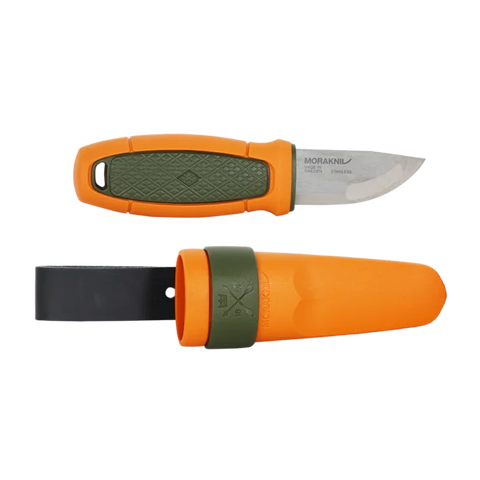
The practical advice has not changed and is worth repeating because people get this wrong every November. If you are testing a deer, keep that animal's meat separate — do not let a processor batch it with three others, and label the bags. Freezing does not destroy prions. Bone out the meat, and avoid sawing through the spine or skull. That work goes faster and cleaner with a blade you can actually maintain in the field, which is the argument we made in the field-sharpening piece; the knives and field-care shelf covers the rest of it, and a compact fixed blade like the Mora Eldris is what most people are missing for the detail work around the head and neck.
The nonresident cut is a separate story wearing the same package
Dropping nonresidents from two bucks to one has nothing to do with disease. It is the same lever Oklahoma, Montana, Colorado, Idaho and Kansas have all pulled in the last two years, for the same reasons: residents fund the agency, pressure on public ground is up, and there is no political cost to charging or limiting people who do not vote there. We ran the full accounting in what nonresident hunting actually costs in 2026.
Worth noting that the nonresident landowner carve-out survives at two bucks. If you own Missouri ground and live elsewhere, nothing changed for you. That exemption is the tell that this is about allocation rather than biology, and it is not a criticism — allocation is a legitimate thing for a state to decide.
What to actually do about it
If you hunt one of the 18 counties that just lost its APR, the herd-level outcome is out of your hands and the property-level outcome is not. Nothing stops you from keeping the rule voluntarily on your own ground. Plenty of people will, and the ones who do should expect to watch neighbors shoot the deer they passed — that has always been the deal with antler restrictions, rule or no rule.
If you hunt the other side of this argument, the honest position is that Missouri has a disease problem that outgrew the tools it built in 2012, and it picked a coherent response rather than leaving a symbolic map on the wall. Several states with similar CWD spread have not picked anything yet.
Either way, check your county before opening weekend rather than after. Missouri is the third state this year to rewrite a deer rulebook mid-career hunters had memorized — Minnesota killed the paper deer tag, Michigan is going to one buck, and we keep the running list in the 2026 deer-reg shakeup roundup. A legal deer last November is not automatically a legal deer this November, and the citation does not care that you have hunted the place for twenty years.