Louisiana banned the retention of any red drum over 27 inches in June 2024. Alabama deleted its oversized-fish allowance in June 2025. South Carolina went from two fish a day to one, with a two-fish boat limit, on July 1, 2026. Georgia has a proposal on the table to cut from five fish to three. North Carolina opens a formal review of its red drum plan on October 1.
Five states in two years, all moving the same direction, and it is not a coincidence. The 2024 benchmark stock assessment found the southern red drum stock — South Carolina through Florida — both overfished and undergoing overfishing. Here is every state's current rule, what the science actually says, and why Texas is sitting this round out.
Where every state stands right now
| State | Current recreational rule | Recent change |
|---|---|---|
| Texas | 3/day, 20–28" slot; one fish over 28" per license year with a Red Drum Tag, plus one with a Bonus Red Drum Tag | No change 2024–2026 |
| Louisiana | 4/day, 18" min, 27" max — no bull reds kept; captain and crew retention banned on for-hire trips | Effective June 20, 2024 (was 5/day, 16–27" with one over) |
| Mississippi | 3/day, 18–30", one fish over 30" allowed within the bag | No change identified |
| Alabama | 3/day, 16–26" slot only — oversized allowance eliminated | Effective June 17, 2025 |
| Florida | 18–27" slot, 1/day. Vessel limit 4 in Panhandle, Big Bend and Northeast zones; 2 in Tampa Bay, Sarasota Bay, Charlotte Harbor, Southwest and Southeast. Indian River Lagoon catch-and-release only. | Regional zones adopted 2022; no change since |
| Georgia | 5/day, 14–23" | Proposed: 3/day, 15–24", implementation Jan. 1, 2027 |
| South Carolina | 1/person/day, 2-fish boat limit, 18–25" slot. Non-offset, non-stainless circle hooks required with natural bait on 4/0 and larger | Effective July 1, 2026 |
| North Carolina | 1/day, 18–27"; possession of fish over 27" unlawful | No change; plan review underway |
One caution on Georgia. The Board of Natural Resources was scheduled to vote August 25, 2026, and I could not find a source confirming the outcome — the Coastal Resources Division's page still reads as forward-looking. Treat it as proposed until CRD says otherwise, and do not confuse this with a similar Georgia proposal that was postponed in 2022.
The number underneath all of it
The Atlantic States Marine Fisheries Commission's 2024 benchmark assessment split red drum into two stocks. The northern stock, New Jersey through North Carolina, came back not overfished with no overfishing occurring — though the assessment had to fall back on a traffic-light analysis because a technically sound population model could not be built, and the yellow indicators showed fishing mortality rising.
The southern stock is the problem. Spawning stock biomass came in at 8,737 metric tons against a 9,917-ton threshold, and the three-year average spawning potential ratio fell below the 30 percent SPR threshold. The target is 40 percent. Addendum II, finalized in October 2025, set a fishing-mortality target for the southern stock and created the process each state is now working through. Georgia's proposal is built to hit 35 or 40 percent SPR and is projected to clear the 30 percent rebuilding threshold in five or six years.
South Carolina's own state assessment is the bleakest single document in the pile. Terminal-year SPR of 0.137 — the lowest since 1987. Abundance peaked at 5.96 million fish in 2002, has been under 3.5 million since 2014, and bottomed at 2.99 million in 2019. Fifteen year classes came in significantly below average, six of them since 2010.
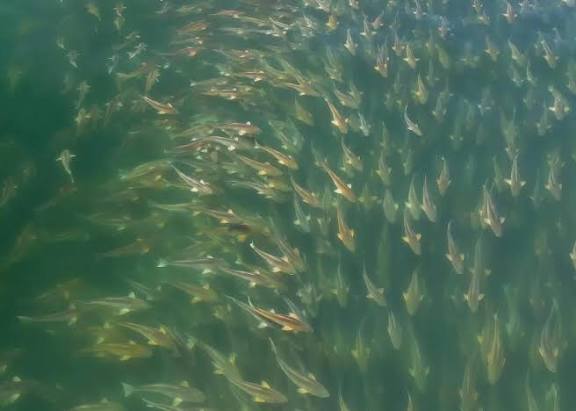
Louisiana's numbers describe a different failure mode. The stock is not classified as overfished, but escapement — the share of juveniles that survive the inshore fishery to join the spawning population offshore — sits at 20 percent against a 30 percent target. Recruitment is at the lowest level ever observed there and has been declining since 1994. And 97 percent of the harvest is juvenile fish. LDWF's modeling says a 35 percent cut in harvest weight recovers the stock by 2050; a 65 percent cut gets there by 2031.
Release mortality is now a landings-scale problem
This is the finding that should change how you fish, and it comes out of South Carolina's assessment rather than anybody's opinion.
SCDNR applies an 8 percent discard mortality rate — eight of every hundred released fish assumed dead. In 1981, South Carolina anglers released 8,250 red drum. In fishing year 2023, they released 3,218,423. Run the rate and you get roughly 257,474 dead discards in a single year, from fish nobody kept.
Catch-and-release did not stop working. It got scaled up by a factor of 390 while the per-fish mortality stayed the same, and at that volume the incidental kill now rivals the landings. South Carolina's new circle-hook requirement is aimed squarely at that arithmetic, and it is the part of their rule most likely to be copied.
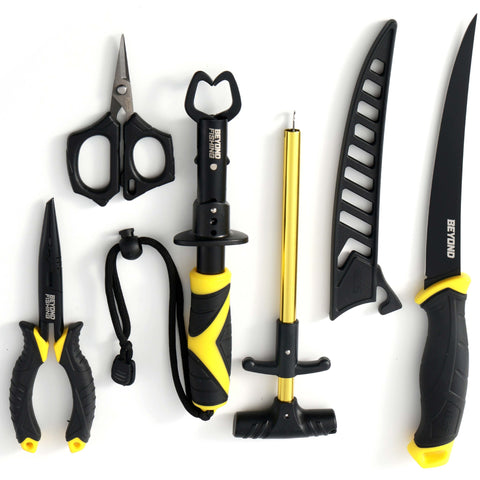
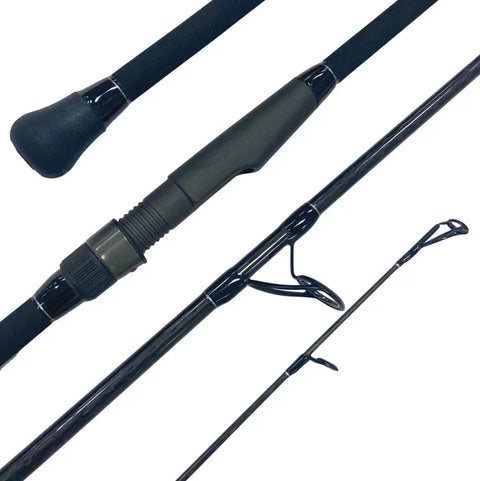
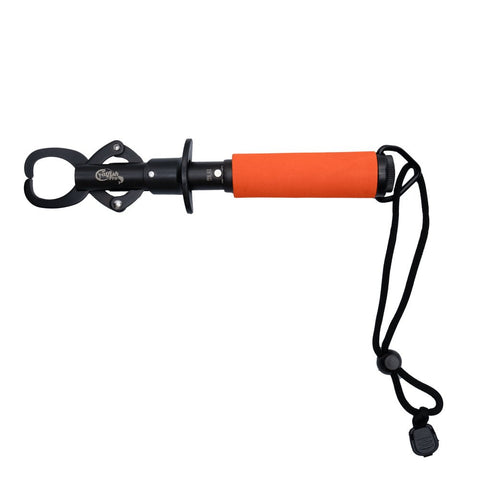
The practical version for you: a circle hook set in the jaw hinge is the single highest-leverage thing in this entire article. So is unhooking in the water, supporting a big fish horizontally, and having a plier and a lip grip within reach instead of in a hatch — a five-piece release kit costs less than a half-day of fuel. So is landing a fish fast enough that it swims off instead of drifting, which is an argument for a rod with backbone rather than the lightest one you own; the Magictail inshore rods are built for that load, and the rest of the saltwater shelf is stocked around the same idea.
Why Texas is not in the table's change column
Texas has not altered its red drum rule in this cycle and, as far as I can find, has no proposal pending. That is an absence of evidence rather than a TPWD statement, and worth a call to the department before anybody bets a trip on it.
The likeliest reason is that Texas started stocking red drum in 1983 and never stopped. More than 820 million fingerlings released, currently 10 to 20 million a year, out of hatcheries at Corpus Christi, Palacios and Lake Jackson. The state stocked its one-billionth saltwater gamefish in July 2024.
Be careful what you conclude from that. TPWD's own genetics work attributes 6 to 17 percent of adult red drum in the eight major bays to stocking. Useful — but it means 83 to 94 percent of the fish are wild-spawned, and the hatchery is a supplement rather than the foundation. Texas's advantage is more likely the combination of a tight 20-to-28-inch slot, a two-fish-a-year cap on breeding-size fish, and forty years of not waiting for a crisis.
Louisiana just started down the same road. The state's first-ever redfish restocking released more than 150,000 hatchery fingerlings on September 11, 2026 — over 50,000 of them at West Cove on Calcasieu Lake, plus releases at the Rigolets and Grand Isle, run as a genetically tagged pilot with CCA Louisiana, the Recreational Fisheries Research Institute, LDWF and USM's Gulf Coast Research Lab. No future stocking targets have been announced. It is a pilot, not a program, and it will not do anything about a 20 percent escapement rate by itself.
If you fish North Carolina, October is your window
NCDMF opens the scoping period for its Red Drum Fishery Management Plan review on October 1 and closes it October 30. No measures are proposed yet — this is the stage where the agency decides what to even consider, which is the stage where a specific, local comment is worth the most.
Four meetings, all 6 to 8 p.m.: October 13 at Cape Fear Community College in Wilmington, October 15 at the NCSU McKimmon Center in Raleigh with a virtual option, October 20 at Craven Community College in New Bern, and October 22 at College of the Albemarle in Manteo.
What this actually means for your season
Check the rule the week you go, not the week you bought the license. Three states changed inside two years, one is pending, and one is about to start a process — and the version of the rule living in your head is probably the one that was true when you learned to fish.
If you are running the Texas coast, the slot and the tag system already make the fall fishery mostly catch-and-release, which is why the bull red run is worth doing well rather than doing greedily. Gear, by species and method, is in the Gulf Coast gear guide and the broader Texas fishing guide.
And note what is not in dispute anywhere in this: every one of these states is arguing about how many fish to allow, not whether the fishery is worth protecting. Red drum is the rare species where the recreational sector asked for the cuts. Florida's snapper fight looks nothing like this — we covered that one's October weekends separately — and neither does the striper argument up the Atlantic. That the redfish crowd mostly agreed is the most encouraging thing in a stack of bad numbers.