Venator has not field-tested the gear in this guide. We chose what we carry by hunting use and specifications, and we say so up front.
The headline out of this year's waterfowl survey is not subtle: the mallard breeding population fell 11% from 2025 and now sits 26% below its long-term average. Ducks Unlimited reports it is the lowest mallard estimate recorded since 1993. If you hunt flooded timber in Missouri, Arkansas or Tennessee, where mallards are the whole point, that number should change how you spend money before opening day.
Here is the part most coverage skips. Total ducks in the traditional survey area were largely unchanged from last year, about 6% under the long-term average, and May pond counts improved from 2025's drought, especially in Canada. Better habitat is why biologists say the 2026 fall flight could be comparable to, or even better than, 2025's. The birds are coming. There are just fewer greenheads to waste, so every pair that makes one pass over your hole is worth working properly.
What the 2026 numbers actually mean for a caller
A smaller mallard base does not mean empty skies. It means the ducks that do show up have been shot at, called at and flared by more bad calling per bird than in a big-population year. Two practical consequences follow.
1. Calling quality matters more per flock
When there are fewer flocks, you cannot afford the one that circles twice and leaves. A call that gives you clean volume without blowing out your lungs, and drops to a soft finish when birds commit, is the difference between a flock that leaves and a limit.
2. Regulations are still liberal, so pressure stays high
Ducks Unlimited expects the Fish and Wildlife Service to recommend liberal frameworks in all flyways again for 2027-28, and the three-pintail daily limit is expected to stay for a third season. Liberal seasons with lower mallard numbers mean the birds that do arrive get hunted hard, which favors the hunter who sounds natural over the hunter who sounds loud.
Season dates worth knowing right now
Oklahoma: the Panhandle counties (Cimarron, Texas, Beaver) open October 10. Zones 1 and 2 open November 14. The daily limit is six ducks, with no more than five mallards (two hens), three wood ducks, three pintails, two redheads, two canvasbacks and one scaup. Nonresidents hunting certain public hunting areas must check in and out, which is free.
Missouri: the North Zone opens October 31 and runs through December 29. The Middle Zone opens November 7 and the South Zone opens November 26. Daily limit is six ducks, four mallards (no more than two hens). Zone boundaries were redrawn for the 2026-2030 cycle, so recheck your zone on the Missouri Department of Conservation map. The nonresident migratory bird permit is $60, and the federal duck stamp now has a $32 digital e-Stamp alongside the $25 paper stamp. The season dates were approved pending final federal sign-off, so confirm with MDC before you hunt.
I did not verify Arkansas's 2026-27 dates for this guide, so check the Arkansas Game and Fish Commission for those.
What to look for in a timber duck call before you buy
Single-reed calls are the choice of hunters who want range and tonal control. They also demand more of the caller than a double reed, which is why people either love them or give up on them. If you are buying one, these are the specs that matter.
Low-pressure response
Timber calling is mostly soft: whines, feeding chatter, a quiet comeback. A call that needs a hard blast to start the reed forces you to over-call. Look for a design built to respond at low pressure and still open up when you want a hail.
Range from one barrel
Running three calls on a lanyard is fine, but a single call that goes from a loud high hail to a quiet finish means you are not fumbling in front of working birds. That is the case for a field or timber single reed over a one-trick call.
Tunability and spares
Reeds and corks wear out, and temperature and humidity change how a call sounds. A box that ships with spare corks and reeds tells you the maker expects you to tune it in the marsh. Tuning is the skill that separates a bad morning from a good one.
Material and durability
Acrylic and wood both work. What matters is a tight fit, consistent reed seating and a build that survives being dropped in water. Buy the call you will actually carry, not the one that is too nice to get wet.
The call we carry: Gaston Custom Calls Timber Duck Call
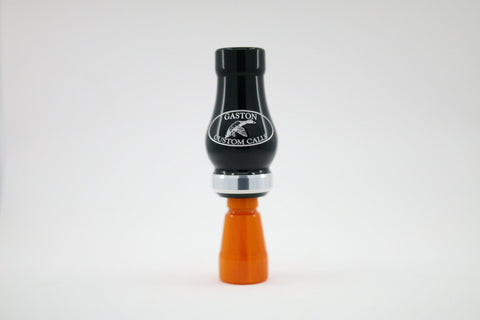
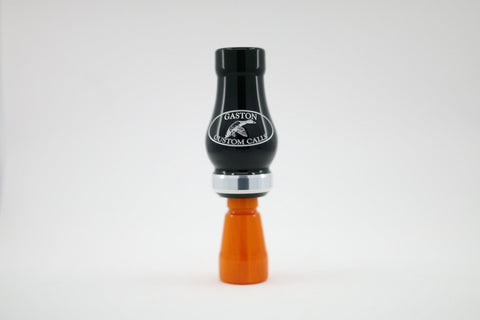
The Gaston Timber Duck Call ($160) is built for the flooded-timber problem described above: soft whines in one breath, a hail that cuts through trees in the next, both through a single quarter-inch hole. Gaston gives it a little more back pressure than their field call to produce the mid-range sound mallards respond to, and every box ships with spare corks and reeds. It is made in the USA.
We carry it because of that tuning flexibility and the range. We have not put it through a season ourselves, there are no customer reviews on it yet, and we are not going to pretend otherwise. If you want a more open call for field hunting, the Gaston Field Duck Call ($160) is the sibling.
The $340 flooded-timber starter rig
A call alone does not get you a limit. Two accessories earn their price in the same hunt:
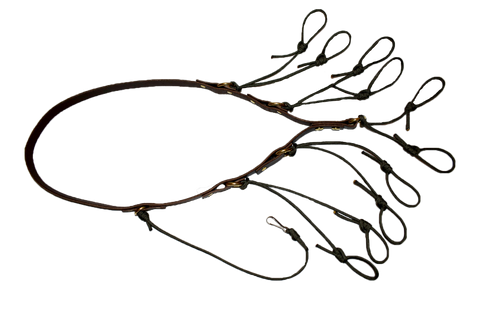
- Chambless Leather/Paracord Duck Call Lanyard ($50): English bridle leather and paracord with solid brass hardware. It holds five calls plus a dog whistle, so a mallard, a wood duck call and a teal call stay sorted and quiet.
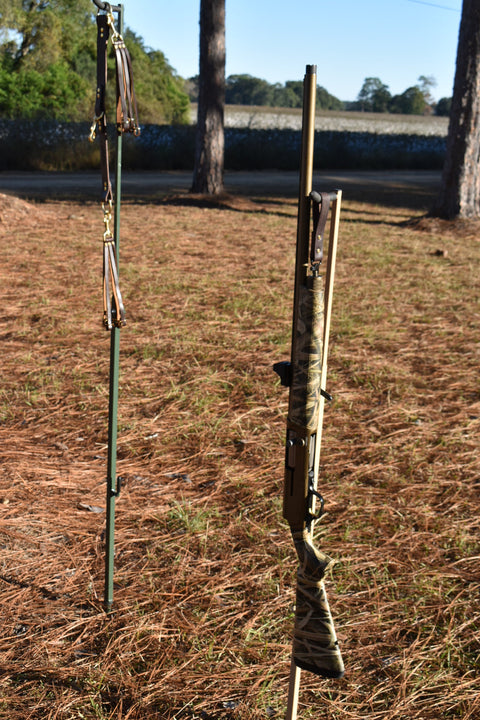
- Chambless Duck Gun Hanger ($130): drives into dirt, grass or marsh and lifts your gun and totes out of the mud, with a rubber-grommeted anchor that keeps the noise down.
Call, lanyard and hanger together come to $340. All three are in stock right now, with 97 calls available.
Frequently asked questions
Is a single-reed call harder to learn than a double reed?
Generally yes. Single reeds give more range and tone control, and they ask more of your air control and practice. If you are new, plan to spend time on it before opening day.
Do fewer mallards mean I should hunt less?
No. Total duck numbers are roughly flat and habitat is better than last year. Mallards in particular are lower, so scouting and calling discipline matter more.
When does the Missouri duck season open?
The North Zone opens October 31, the Middle Zone November 7 and the South Zone November 26. Zone boundaries changed for 2026-2030, so check the MDC map.
What is the Oklahoma daily duck limit?
Six ducks, including up to five mallards (no more than two hens), three wood ducks, three pintails, two redheads, two canvasbacks and one scaup. The Panhandle opens October 10.
Does Venator have first-order savings?
Yes. WELCOME10 applies to eligible products on your first order.
Sources: Ducks Unlimited 2026 waterfowl season outlook; StateOutdoors Oklahoma and Missouri 2026-27 season summaries (confirm all dates with your state agency).