Texas is not one hunting state. It is at least three, and the boot that carries you up a caliche draw in the Hill Country will fill with water and quit on you in a Gulf Coast marsh. Ask a Llano County whitetail hunter and a Chambers County duck hunter what a good boot is and you will get two answers that share almost nothing. So this is not a list of ten boots you should buy. It is a field guide to matching the boot to the ground you actually hunt, using footwear we stock and can vouch for.
A note up front, because we would rather be honest than move product: we do not carry a dedicated big-game hunting-boot line with 400-gram Thinsulate and a mountain last. What we stock is a deep bench of waterproof tactical and work boots that hunt exceptionally well in Texas heat, plus the waders and snake protection the coast and brush country demand. For most of this state that is the right tool anyway. Where it is not, we will tell you.
Winners at a glance
- Rocky Hill Country (cedar breaks, limestone, steep draws): a 6-inch waterproof boot with an aggressive Vibram lug — grip and drainage over insulation.
- South Texas brush country (mesquite, prickly pear, senderos): an 8-inch leather or suede upper — height and thorn resistance, plus a snake plan.
- Gulf Coast marsh and flooded timber: not a boot at all — a breathable chest wader.
- Coastal prairie and mixed early-season sits: a lightweight 6-inch waterproof work boot you can run all September.
Rocky Hill Country: grip beats everything
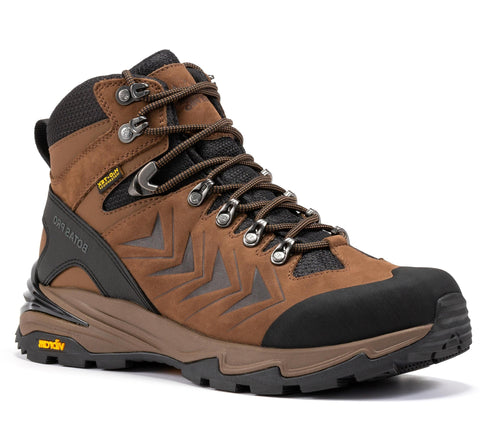
The Edwards Plateau eats soles. Loose caliche over limestone shelf, cedar-choked draws, and enough elevation change to remind you the Hill Country is not flat. Insulation is a liability here — the November rut can still see 70-degree afternoons — so the priority is traction and a boot that sheds the small rock that works into every seam. A 6-inch height keeps you nimble on side-hills while still guarding the ankle. We reach for the Botas Pro Brown 6-inch waterproof hiking boot, whose Vibram traction-lug outsole bites wet limestone the way a work sole never will. Verdict: the best all-around Hill Country whitetail and exotics boot we carry. The one limitation — the low collar gives you less thorn protection than the brush-country crowd will want.
South Texas brush country: height and hide
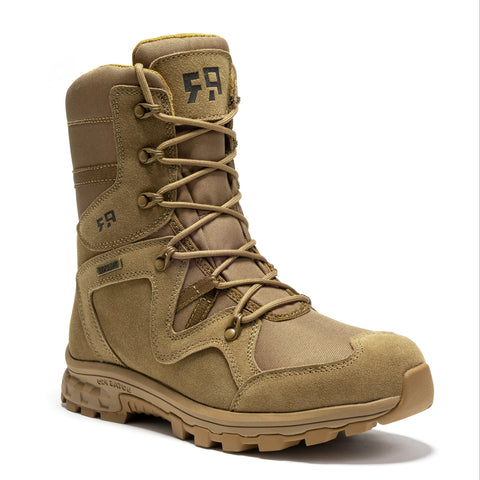
Down in the Brush Country, the enemy is not the terrain, it is the vegetation and what lives in it. Mesquite, blackbrush, and prickly pear will shred a low canvas boot and your ankles with it, and this is the heart of Western diamondback range. Go tall and go leather. The ROCKROOSTER Colmar 8-inch waterproof suede tactical boot gives you a full 8 inches of upper against thorns and stall walking, a waterproof membrane for those senderos that hold water after a rain, and a coyote tone that disappears in sun-cured brush. Verdict: the toughest, tallest boot in our lineup and the right call for all-day sendero glassing. Limitation: suede needs conditioning to stay waterproof through a full season, so treat it before opening day.
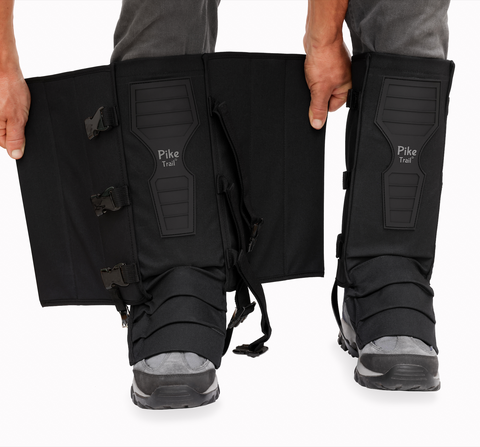
On snake protection, straight talk: a true 16-inch snake boot is the gold standard, and our snake-boot models are currently out of stock rather than something we will pretend to sell you. The honest, in-stock fix is a pair of Pike Trail snake gaiters worn over any of these boots. Gaiters cover the strike zone below the knee — where the overwhelming majority of rattlesnake bites land — and they move between pairs of boots, which a dedicated snake boot cannot. If you hunt South Texas or the coast September through October when snakes are still active, this is not optional gear.
Gulf Coast marsh: stop trying to make a boot work
From the Chenier plains to the Laguna Madre, the coast defeats boots. Once you are punching through saltgrass and knee-deep gumbo to reach a duck hole, an 8-inch boot is a bucket you are wearing. The answer is a chest wader. Our MERIDIAN Z zippered chest wader gets you across the mud dry, and the front zip is a genuine mercy on a 45-degree marsh morning when nature calls in the middle of a hunt. Verdict: the coast standard, boot and pant in one. Limitation: waders are for water, not walking a mile of hardpan — keep a boot in the truck for the dry approach. Build the rest of your coastal kit from the waterfowl and duck hunting collection.
Coastal prairie and the early-season everyman
Not every hunt is an extreme. A lot of Texas seasons — the September 1 dove opener, early-season stand sits, walking a coastal prairie for wet-grass mud — just need a comfortable, waterproof boot that will not cook your feet in the heat. The ROCKROOSTER Woodland 6-inch waterproof composite-toe boot is that boot: light enough for long walks, waterproof for the dew and the mud, and broken in fast. Verdict: the value pick that covers 80 percent of Texas hunting days. Limitation: the composite toe adds a few ounces you do not strictly need for hunting, though you will be glad of it hauling gear.
How to choose: the five variables that actually matter
Height. Six inches for open, rocky, or hot ground where you want to move. Eight inches for brush, thorns, and ankle-rolling terrain. Only go higher when you are into true snake country, and cover that with gaiters instead.
Waterproofing. In Texas, waterproof means dew, dry-creek crossings, and coastal mud — not standing water. A membrane boot is right up to the point the water tops the collar. Past that, it is a wader. Do not ask a boot to be a wader.
Insulation. This is the mistake we see most. Texas hunters buy northern insulation and roast. For the vast majority of this state, uninsulated is correct. The rut can run warm even in January, and you can always add a heavier wool sock. Reserve 400-gram-plus insulation for the Panhandle in a genuine cold snap.
Snake protection. Real from September through the first hard cold. Gaiters over your normal boot are the most flexible answer, and they follow you from the brush to the marsh.
Break-in. Leather and suede boots need miles before opening day — plan on two to three weeks of walking, not a weekend. We wrote the full playbook here: break in your boots before opening day. Do not learn this lesson on a five-mile pack-out.
The one upgrade that matters more than the boot
Socks. A good boot with a cotton sock is a blister factory. Pair any of these with heavyweight over-the-calf wool socks — wool wicks in September heat and insulates in January cold, and the over-the-calf height is what makes an 8-inch boot or a gaiter comfortable instead of a rub. It is the cheapest performance you will ever buy.
How we picked
Everything here is a boot, wader, or gaiter we actually stock and would wear ourselves, matched to the specific Texas ground it is built for — not a spec sheet copied off a box. Where we do not have the ideal product — a dedicated 16-inch snake boot, heavy northern insulation — we said so and pointed you to the working alternative rather than overselling. See the full lineup in the hunting boots collection, then buy for the ground under your feet, not the boot on the poster.
Frequently asked questions
Do I need insulated boots for hunting in Texas? For most of the state, no. Uninsulated boots plus a heavyweight wool sock handle everything from the September dove opener to the January rut. Only the Panhandle in a hard freeze justifies 400-gram-plus insulation.
What is the best boot for snakes in South Texas? A true 16-inch snake boot is ideal, but a flexible and reliable in-stock option is snake gaiters worn over a tall leather boot. Gaiters protect the below-the-knee strike zone and move between boots.
Do I need waterproof boots or waders for the Gulf Coast marsh? Waders. A waterproof boot only helps until water tops the collar; marsh hunting means chest waders, with a boot kept for the dry walk in.
How long does it take to break in hunting boots? Plan on two to three weeks of walking before opening day for leather or suede uppers. Condition suede boots before you start to keep them waterproof.