Wisconsin's DNR last updated its EHD page on September 16, and the county tallies on it read: just over 1,100 dead deer in Washington County, just over 340 in Waukesha, around 70 in Ozaukee, around 50 in Dodge, and fewer than 10 in Milwaukee. Add them and you get roughly 1,570 deer across five southeastern counties, confirmed in one and suspected in the other four. The previous benchmark for Wisconsin, in 2012, was about 370 deer across twelve counties.
That arithmetic is mine, not the agency's, and it matters how you say it. Outdoor press has been running the phrase "worst in state history," and by raw mortality since EHD first appeared in Wisconsin in 2002, that looks right. The DNR itself has not used the words "worst" or "record" in writing, and a few outlets have reported the ~1,100 figure as a statewide total when the DNR's own page attaches it to Washington County alone. If you see a number this fall, check which county it belongs to.
EHD is the fast one. CWD is the slow one.
Deer camp collapses these into one problem and they are almost nothing alike.
Epizootic hemorrhagic disease is a virus carried by Culicoides biting midges — the no-see-ums that eat you alive at a stock tank in August. There is no deer-to-deer transmission. An infected deer spikes a fever, goes for water, and frequently dies next to it, which is why the first sign is usually carcasses along a creek rather than sick deer on camera. Virginia's DWR puts the behavior plainly: lying on cool, wet soil is how a deer treats a fever.
The season ends at frost, not at a date. Kill the midges and you end transmission. Everything anyone says about a final tally this year is provisional until the first hard freeze, and Pennsylvania's Game Commission has said as much in past outbreaks.
Chronic wasting disease is the opposite animal — a prion, years to show, always fatal, persistent in soil. We keep a running CWD tracker by state for that one, and a 2026 study found a healthy-looking deer can spread it, which is the reason you cannot screen by eye.
Where it is confirmed in 2026
| State | Status | Detail |
|---|---|---|
| Wisconsin | Confirmed Aug 18 | Washington County first; suspected in Waukesha, Ozaukee, Dodge, Milwaukee. ~1,570 deer as of the Sept 16 DNR update. |
| Michigan | Confirmed Sept 9 | Branch, Ingham, Jackson and Lenawee counties. Deer counts not published. Results pending in additional counties. |
| Virginia | Suspected | DWR reported sporadic mortalities consistent with hemorrhagic disease on Sept 1. No counties or numbers published. |
That is the list I can source to an agency as of September 21. If you come across a state-by-state EHD roundup this month, check its dates — a widely circulated Pennsylvania and Ohio outbreak story is from 2025, and a popular national map is from 2022. Recycled outbreak maps are the most common misinformation in this subject, and they are usually shared in good faith.
Michigan's numbers are worth sitting with even without a body count. DNR deer specialist Brent Rudolph has said the state is seeing EHD at levels similar to 2025, while DNR veterinarian Dr. Scott Larsen framed the longer trend directly: as Michigan's weather has gotten warmer and wetter, conditions have become more favorable for the virus and for the midges that carry it.
What it does to a deer herd, and what it doesn't
Wisconsin DNR deer herd health specialist Erin Larson gave the standard, and correct, version when the outbreak was confirmed: it may be alarming to see many dead deer in a localized area, but these outbreaks rarely have significant long-term effects on the overall herd.
Both halves of that sentence are load-bearing. Statewide, EHD is a bad month, not a lost decade — the herd refills from the surrounding landscape within a few seasons. Locally, it can be brutal. A Washington County wildlife biologist put the worst pockets at a 90 percent population drop. If your 200 acres sits inside one of those pockets, the statewide reassurance does not help you and you should not pretend it does.
Survivors carry marks. Deer that live through EHD often show cracked or sloughing hooves from the fever and appear more susceptible to pneumonia afterward. You may shoot one this fall and wonder what happened to its feet.
Nobody is cutting your tags, and here is why
The obvious reaction to 1,500 dead deer is fewer antlerless permits. Wisconsin's DNR explained why that did not happen: there is no switch to flip. Changing permit availability mid-season requires an emergency rule process with a defined geographic area, a scope statement, and Natural Resources Board action. That machinery does not move on a six-week timeline.
There is precedent for it happening eventually — Ohio cut Athens, Meigs and Washington counties from three deer to two, effective December 1, but that was 2025, after a much larger outbreak. Michigan has published no 2026 change.
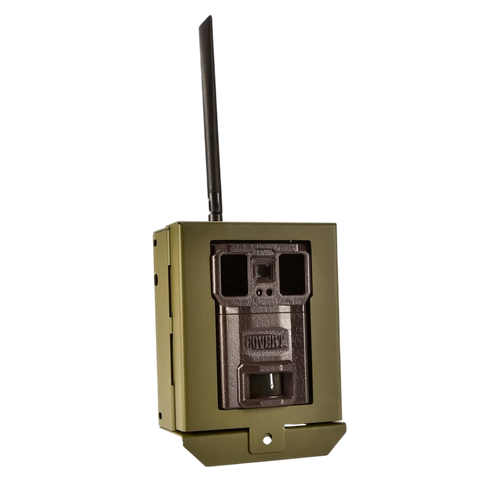
Which pushes the decision onto you. The agency is not going to tell you your township lost most of its deer; the agency does not know. You do, if you have cameras out. A run of cameras on the same sites year over year is the only instrument an individual actually owns for this, and September is when the comparison is worth something — a solar cellular unit like the Bushnell CelluCORE 20 will tell you what is standing on your ground without you walking in to find out.
If your ground came through it, the honest move is restraint on does this year rather than a rule change that is not coming.
The three questions hunters actually ask
Can I catch it? No. Wisconsin's DNR states it flatly: the virus does not infect humans — not from handling an infected deer, not from eating venison from one, not from being bitten by an infected midge. There is no risk to dogs either.
Is the venison safe? Venison from a healthy deer taken in an EHD area is safe. Do not eat an animal that was visibly sick when you shot it — that is Michigan DNR's guidance and it is the same rule that covers every other disease on the landscape. Gloves on, and the virus does not survive in a carcass.
What do I do with the dead ones I find? Report them. Wisconsin takes reports through its Sick/Dead Wildlife form, by email, or at 608-267-0866. Michigan uses Eyes in the Field. Pennsylvania runs 1-833-PGC-WILD. Agencies build their maps from hunter and landowner calls, and a county with nobody calling looks clean on paper.
What I cannot tell you
The clean story would be: hot, dry summer, concentrated deer, exploding midge populations, dead deer. There is no published 2026 dataset linking drought severity to EHD severity, and the agency framings actually conflict — Michigan cites warmer and wetter conditions favoring midges, while Wisconsin observers describe mild winters followed by hot, dry summers. Both are plausible mechanisms. Neither has a 2026 number behind it, and I would rather say so than hand you a tidy causal line.
What is not in doubt is the timeline. Wisconsin's county totals have risen every week since mid-August. Michigan has test results pending in counties not yet on the list. Virginia's suspected cases may convert. All of it stops when the midges die, and not one day before.
If you hunt southeastern Wisconsin or south-central Michigan, walk your creek bottoms before the opener rather than after. And if the rut is the part of the season you have built vacation around, note that EHD does nothing to the timing of breeding — photoperiod does not care how many deer are left. It only changes how many are there to do it. The whitetail shelf is where we keep the rest of the season's gear.