The whitetail rut in 2026 will peak on close to the same dates it peaked in 2025, in 2015, and in 1985. Not because of a moon. Not because of a cold front. Because the amount of daylight reaching a deer's eye on November 8 in northern Illinois is identical every single year, and daylight is the thing running the calendar.
I have bought the rut-prediction issues. Circled the dates. Burned vacation on them. So this isn't a lecture. It's a note that the one prediction system with a real paper trail behind it is also the most boring one, and boring is why it works.
The moon theory got tested. It lost.
The most durable rut prediction on the newsstand is the "rutting moon" — the idea that the second full moon after the autumn equinox triggers breeding. Pennsylvania actually checked. The Game Commission aged fetuses from more than 6,000 road-killed does between 2000 and 2007, back-calculated conception dates, and compared them against the rutting-moon prediction. Their finding: the rutting moon lined up with the median conception date only in the years when it happened to fall in mid-November, which is where Pennsylvania's peak sits anyway. A prediction that only works when it agrees with the default isn't a prediction.
The Mississippi State Deer Lab puts it flatter still. Weather, they write, has absolutely no influence on the timing of breeding behavior, and breeding is not linked to moon phase or temperature.
What actually sets the date
Photoperiod. Day length. As daylight hours shrink through fall, the pineal gland — a small gland at the base of the brain — ramps up melatonin production, and that hormonal cascade is what pushes bucks into rut and cycles does into estrus. The University of Georgia describes the same chain: fewer daylight hours, more melatonin, more testosterone.
Here is the part that matters for planning. Day length on a given calendar date is a function of latitude, and latitude does not move. The photoperiod cycle repeats within a few minutes of itself year over year. So does the rut. Biologists don't guess at this. They age fetuses by head-to-rump length, back into a conception date, and average hundreds of them.
Peak breeding, where the numbers are public
I'm not handing you a fifty-state table, because I can't verify fifty states. Here is what I could source to a named agency or university. If your state isn't on it, call your agency's deer program and ask for their conception-date study. Most southeastern and midwestern states have one in a drawer.
| Region | Peak breeding | Source |
|---|---|---|
| Pennsylvania / Northeast | Mid-November; 9 of 10 does bred mid-Oct to mid-Dec | PA Game Commission |
| Northern Illinois / Upper Midwest | Mean conception Nov 8 (4,781 fetuses, 2003–2013) | Illinois Natural History Survey |
| Mississippi | Late Nov in northwestern counties to mid-February in the southeast | MSU Deer Lab |
| Texas | Sept 30 (northern Gulf Prairies) to Dec 24 (western South Texas Plains) | TPWD |
Two things jump out of that table. The northern tier is tight and predictable — Pennsylvania and Illinois land within days of each other despite the distance, because both sit in the same photoperiod band. The Deep South is a genuine mess, and not in a way you can reason your way out of. Mississippi's Wildlife Bureau has been collecting conception dates from mature does for more than twenty years and reports that the average breeding date in extreme southeast Mississippi can run five weeks later than parts of the Delta. Some Deep South herds breed well into December and January. Latitude explains part of it; local genetics and doe philopatry, meaning daughters settle near their mothers and carry the family's breeding timing with them, explain the rest.
Texas is the widest spread on the board — nearly three months from the northern Gulf Prairies to the western South Texas Plains — and the archery season opens long before any of it starts, which is a planning problem all its own; our read on the Texas archery opener covers the zones and the antler-restriction counties. And if you want the strongest argument against everything above, a reader made the case to us that buck-to-doe ratio, not photoperiod, is what decides whether your season is a tight rut or a three-week trickle. We went and looked: what the research actually says about herd ratio and rut intensity.
So what is a cold front actually doing?
Less than you think, and this is where I have to argue against my own instincts. The folk version is that a front pushes deer onto their feet in daylight. The GPS-collar work is thinner than that. The National Deer Association's review of the research found temperature's effect on total movement distance to be negligible, and Penn State's Deer-Forest Study found no difference in speed or distance before, during, or after a front. That was seven collared deer, so hold it loosely. Nobody has published the study proving the folklore either.
What a front reliably changes is you. You sit longer at 28 degrees than at 68. That's worth something. It just isn't the same claim.
The four phases, and the one that eats your vacation
Work these off your local peak breeding date, not off a calendar square. MSU's data says the season runs 30 to 45 days with most breeding inside a 21-day window centered on the peak.
- Seeking (roughly 10 to 14 days before peak). Bucks are covering ground looking, does aren't receptive yet. Best odds all year of a mature buck on his feet in daylight. Sit funnels and pinch points, all day. Calling and rattling work here because he has nothing better to do.
- Chasing (about a week out). The circus. Visible, loud, and slightly less productive than seeking, because bucks are locked onto specific does instead of cruising predictably. Still a fine week in a tree.
- Lockdown (the peak week itself). This is the trap. Most does are receptive at once, every buck is tending one, and a tending pair beds in cover for 24 to 48 hours and does not move. Hunters take this week off because a magazine called it the peak, then sit an empty woods and decide the rut was "late this year." It wasn't. It was happening 80 yards away in a thicket.
- Post-rut (two to four weeks after). Underrated, and the data shows exactly how late unbred does and doe fawns cycle: Illinois logged a mean fawn conception date of December 2 against November 8 for adults, and Pennsylvania found fawn breeding peaking in late November and early December. A real second window. Play it on food.
Picking your week
Take the week that ends three to five days before your local peak conception date. If your county's peak is November 8, you want November 1 through 7 in the stand, not November 8 through 14.
Check that against your season structure — the 2026-27 season dates, state by state are collected here — because most firearms openers are built around the peak, not before it. Openers cluster on November 14 in Missouri, Kentucky, Virginia, Nebraska, South Dakota, Indiana, and Vermont, and on November 21 in Alabama, Mississippi, Oklahoma, Tennessee, and Wisconsin. Pennsylvania's firearms deer season runs November 28 through December 13 in 2026, which puts the whole thing on the back side of the state's own mid-November peak. If you're a bowhunter in a November 14 state, the seeking window is yours alone and the woods are quiet. That's the edge.
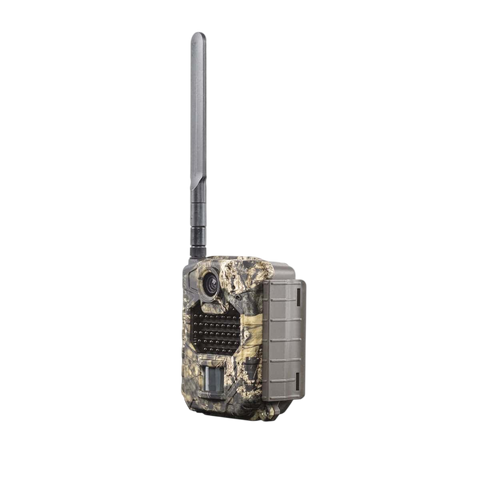
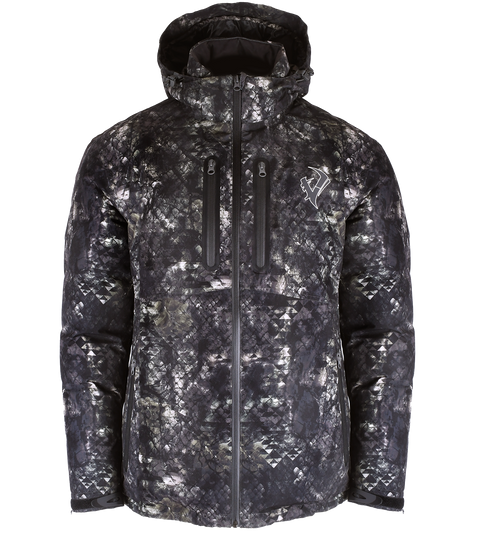
Two practical things follow from it. Dress for the sit rather than the walk in, because the seeking phase rewards all-day sits and an all-day November sit turns into a warmth problem hours before it turns into a hunting problem — the whitetail lineup is built around insulated layers for exactly that. And if you would rather know your own peak than borrow a regional average, a camera on a scrape line will tell you when seeking starts on your ground. Based on the specifications and construction, the Bushnell CelluCore 20 runs dual-carrier cellular with a solar panel, which is the difference between walking in to pull cards every week and leaving the woods alone in the weeks that matter; it sits with the rest of the blind and camera gear.
The rut is not going to surprise you in 2026. It has never surprised anybody. The only variable is whether your five days off land in the seeking phase or over a thicket where nothing has moved since Tuesday.