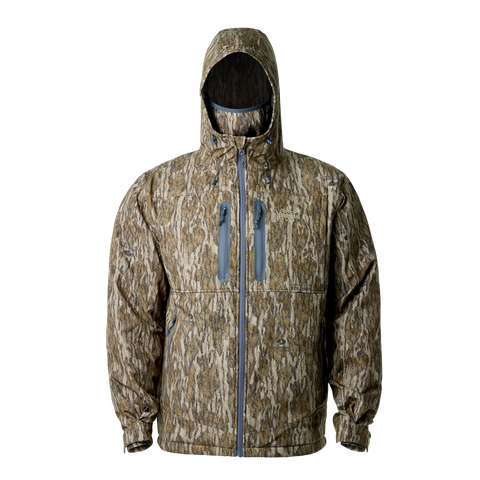
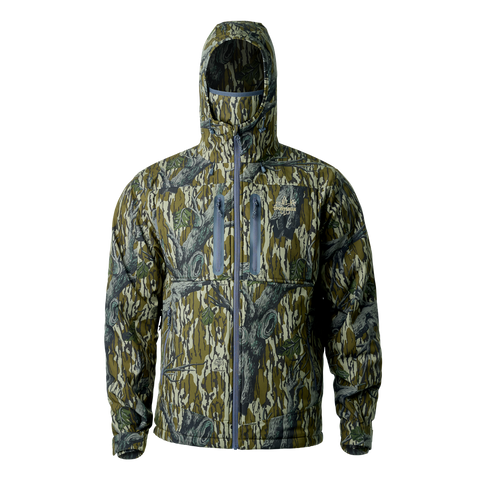
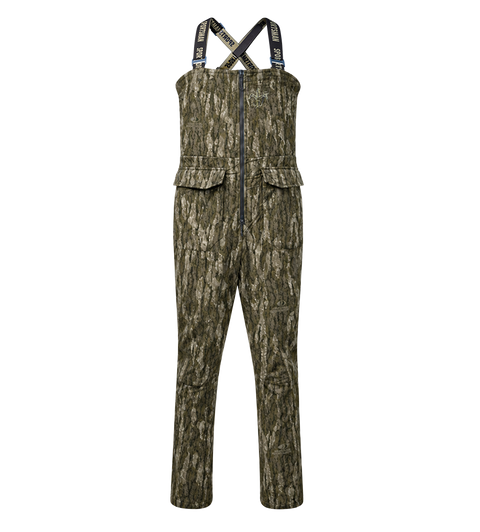
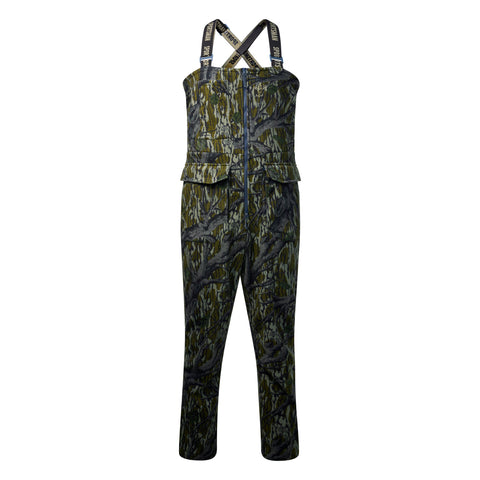
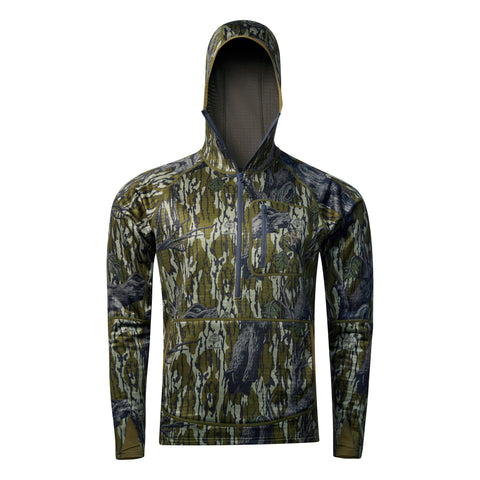
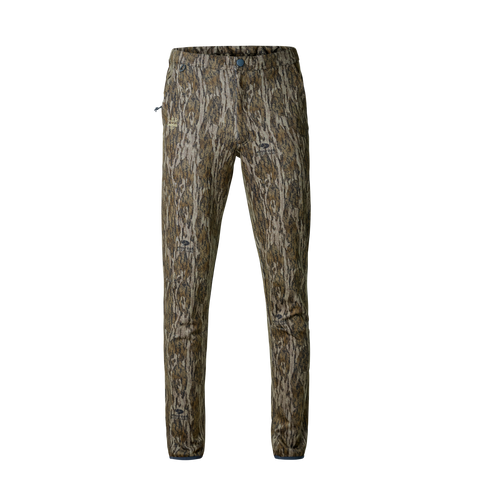
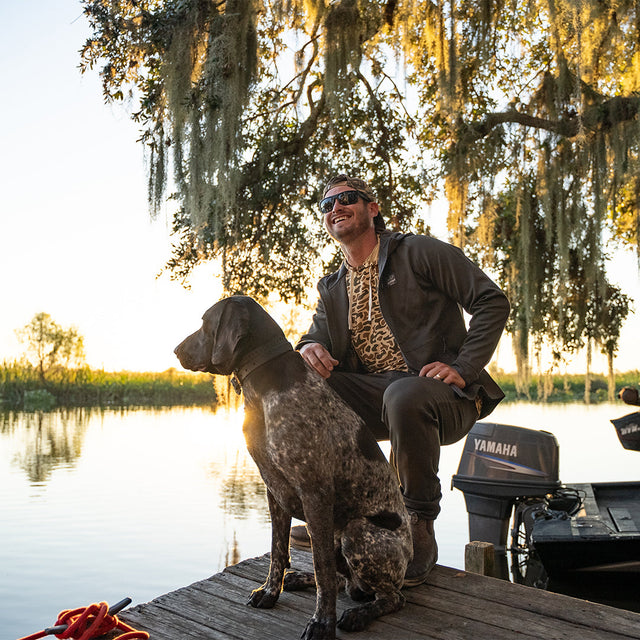
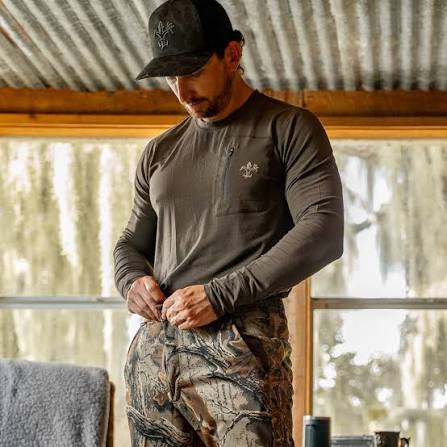
The short answer: buy Mossy Oak Bottomland if most of your hunting happens at ground level or below the canopy: flooded timber, river bottoms, a ground blind against dark trunks, a creek-bottom duck hole. Buy Mossy Oak Treestand if you spend November and December 20 feet up in bare hardwoods, where a deer looking at you sees limbs and grey sky, not dirt. The same Sportsman Gear jackets, bibs and hoodies come in both patterns at the same price, so the only real decision is where you sit.
Shop the side-by-side: DayBreak Insulated Jacket in Bottomland and the same jacket in Treestand, both $275.
A note on how this was written: Venator hasn't field-tested these garments. What follows comes from Mossy Oak's own description of each pattern, Sportsman Gear's specifications, and the gear Aldo picked as a whitetail hunter himself.
Where each pattern came from, and why it matters for what you buy
Bottomland is the original. Mossy Oak debuted in 1986 with Bottomland, built from what founder Toxey Haas picked up off the ground in the Mississippi woods: dirt, bark, sticks and leaves. It's dark and brown, and it reads as a tree trunk and the floor around it. Mossy Oak says its other heritage patterns were all built on the Bottomland base, which is why the two look related up close.
Treestand came later and does one specific job. In the original version, Mossy Oak layered two knotty limbs over the painted bark so a bowhunter off the ground would blend into branches. The pattern has since been reworked for elevated whitetail hunters, and retailers describe it as working best once the leaves are down in late fall and winter: a deer looking up sees bare limbs against the sky, and Treestand is drawn to match that view.
Put plainly, Bottomland is camouflage for looking across at something dark. Treestand is camouflage for being looked up at against something light.
Bottomland vs Treestand at a glance
| Mossy Oak Bottomland | Mossy Oak Treestand | |
|---|---|---|
| Look | Dark brown bark, dirt and leaf litter | Bark base with grey limbs, lighter overall |
| Best background | Tree trunks, timber, ground cover, brush blinds | Bare hardwood canopy and open sky |
| Best hunt | Flooded timber and river-bottom ducks; ground-blind or tree-base deer and turkey | Late-season whitetail from an elevated sit |
| Weakest spot | Up a tree with sky behind you, where it reads as a dark blob | Dark timber at ground level, where it runs light |
| Sportsman Gear pieces in stock | The same line in both: jackets, bibs, pants, hoodies, base layers, gaiters and the Outbound under-wader joggers | |
| Price | Identical by garment: $29 gaiter to $275 insulated jacket | |
Pick Bottomland if…
- You hunt ducks in timber or along creek bottoms. Standing against a trunk in knee-deep water is exactly the background Bottomland was drawn from. Sportsman Gear's duck-specific pieces come in Bottomland, like the Outbound Wader Jogger Pants ($119), a fleece layer made to go under waders. More on what goes under waders in our layering guide.
- You sit on the ground for deer or turkey. Backed up against a big oak or inside a brush blind, the dark bark tones hold up better than a sky-tinted pattern.
- You want one pattern for duck and deer. If you only buy one jacket, Bottomland covers more ground-level situations. The Drifter Fleece-Lined Bibs ($259) are fleece-lined and water-resistant, so they cross over from a duck hole to a ground sit for deer.
Pick Treestand if…
- Your season is mostly November and December from a stand. Once the canopy drops, you're a shape against grey branches and sky. That's the problem Treestand was built for.
- You already own dark camo. One option is to keep the dark pattern for early season and switch to a lighter top layer once the leaves are gone. A Scout grid-fleece hoodie ($99) or Drifter Sherpa Shirt Jacket ($159) in Treestand is a cheaper way to test that switch than a full outer shell.
- Movement is your weak point up top. Camo won't fix a hunter who fidgets, but on an elevated sit what shows is your upper body against the sky. That's where the pattern on your jacket matters most, more than on your pants.
Which pieces to buy in which pattern
Because the line is the same in both, you can mix patterns. One way to split it, based on how each pattern is built:
- Top layer (what a deer sees in a stand): Treestand if you hunt elevated, Bottomland if you hunt on the ground. The DayBreak Lightweight Jacket ($169) covers the mid-season and the DayBreak Insulated ($275) the cold sits.
- Bottoms: pattern matters less from a stand, because the platform and trunk cover most of you. Buy the bibs in whichever pattern also suits the rest of your season.
- Face and neck: a $29 fleece-lined gaiter in your top-layer pattern. Your face is the brightest thing in the tree.
If you're layering for long, cold sits, our late-season layering guide walks through base, mid and outer layers. For how Sportsman Gear compares with GameGuard as a whole system, see Sportsman Gear vs GameGuard.
Buying it as a gift
Ask one question before you pick a pattern: "Do you hunt up a tree or on the ground?" If they hunt ducks at all, Bottomland. If they're a late-season stand hunter, Treestand. If you can't ask, Bottomland is the safer pick because it covers more ground-level hunts. Check the size options on each product page: jackets and bibs run S to 2XL or 3XL, and the pants are listed by waist range. More ideas by budget in Camo Gifts for Hunters.
What camo can't do
No pattern beats a deer's nose or makes up for movement at the wrong moment. Wind, stand placement and sitting still decide more hunts than which Mossy Oak you're wearing. Pick the pattern that matches your background, then spend your effort on the things camo can't fix.
Browse every piece in both patterns on our Camo page, or the duck-specific Bottomland gear under Waterfowl & Duck Hunting. For quieter fabrics, see Quiet Hunting Clothes.
Sources: Mossy Oak, "The History of Full Foliage" and pattern history pages (mossyoak.com); Bowhunter, "The History of Hunting Camouflage"; Mossy Oak Treestand descriptions as published by licensed retailers; Sportsman Gear product specifications. Prices are current as of November 11, 2026 and can change.