Most cold deer sits are lost before you ever clip into the tree. You walk in wearing the jacket you plan to sit in, you sweat through your shirt on the climb, and an hour later that damp layer pulls heat out of you faster than any north wind. Late-season deer hunting layering is less about buying the warmest coat and more about building a system you can add to after the walk, not before it.
This guide lays out that system, layer by layer, with what each piece has to do and where it usually fails. The examples come from the Sportsman Gear line we carry, because it was designed as a matching set from base layer to outer shell, and because the specifications are published down to the insulation weight.
We have not tested this gear across a late season in a stand, and we will not pretend otherwise. What follows is based on the published specifications and construction, cold-stress guidance from the CDC's National Institute for Occupational Safety and Health, and the experience of people who chase whitetail in November and December.
The constraint that decides everything: sweat on the walk in
NIOSH's cold-stress guidance for outdoor workers makes a point that hunters underrate: hypothermia can set in even above 40°F if you get chilled by rain or sweat. Its clothing advice is three layers, loose-fitting rather than tight: an inner layer of wool, silk or synthetic to keep moisture away from the skin, an insulating middle layer, and an outer layer against wind and rain. Cotton loses its insulating value when wet; wool and most synthetics hold on to it.
For a deer hunter, that translates into one rule. Walk in light, then layer up on stand. Pack the heavy outer layer on your back or carry it over your arm, walk in wearing the base and maybe a light mid, and put the insulation on once your heart rate settles. If you have a long walk, unzip early. A dry base layer at minute five of the sit is worth more than an extra 60 grams of insulation at minute ninety.
The second rule is fit. Each outer layer should be cut to go over the one beneath it without compressing it, because the trapped air is doing much of the insulating. That is why the pieces below are described by their makers as base, mid and outer cuts, and why sizing up in the outer layer is often the right call when you plan to wear everything at once.
Layer 1: the base layer has one job
The base layer's job is to move sweat off your skin, not to keep you warm. Anything cotton, including your favorite hoodie, is the wrong answer here.
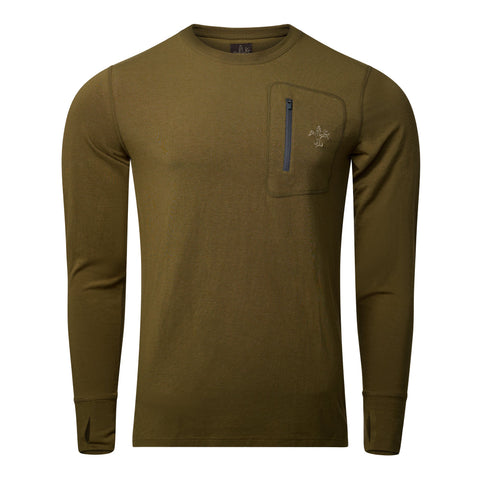
The Sportsman Gear Bamboo Base Layer Crew ($54) uses a bamboo-blend fabric described as moisture-wicking and odor-resistant, with thumbholes so the sleeves stay put when you pull a jacket on over it. The matching Bamboo Base Layer Pant ($54) adds stirrups that keep it from riding up inside your boots on the walk. Both also come in a solid Cypress color (crew, pant) if the base layer will never be seen.
If you would rather have synthetic against the skin, the Rambler Series Crew ($59) is a 90% polyester and 10% spandex blend with a snug base-layer cut. The maker suggests sizing up. The Rambler Series Hoodie ($75) is the same fabric with a hood and a built-in face mask, which earns its place on early-season sits when it is the only top you wear.
Layer 2: the mid layer is where you tune for temperature
The mid layer traps warm air. It is also the layer you swap most often across a season, so it pays to have two weights.
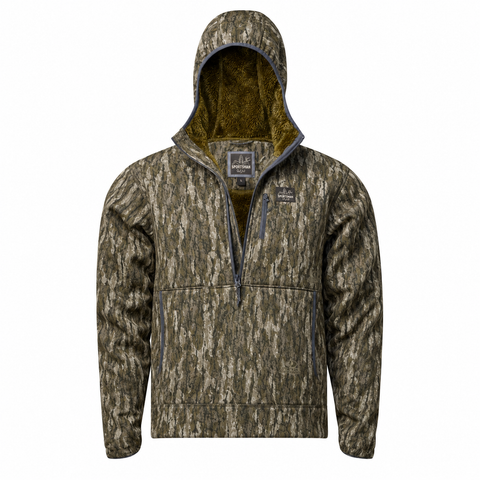
Light mid for the 40s and walking in: the Scout Hoodie ($99) is waffle fleece with a half zip, which makes it easy to vent on the walk. Waffle fleece breathes well for its warmth, which is exactly what you want under a jacket you are about to sit still in.
Heavy mid for the 20s and 30s: the Cold Front Sherpa Hoodie ($189) is sherpa-lined through the hood and body at 300 GSM, with a wind- and water-resistant face and magnetic kangaroo pockets that close on their own. It is cut as a top layer, so on a calm, dry day it can be your outer layer too.
Core warmth without bulky sleeves: the DayBreak Vest ($159) has 60 grams of GoldPro insulation behind a DWR-finished shell. A vest keeps your core warm while leaving your arms free, which matters if you hunt with a bow.
Layer 3: the outer layer stops wind and holds the heat in
On stand, wind is the enemy, not air temperature. The outer layer needs to block wind and shed light rain or snow, and it should be quiet enough not to scrape when you turn.
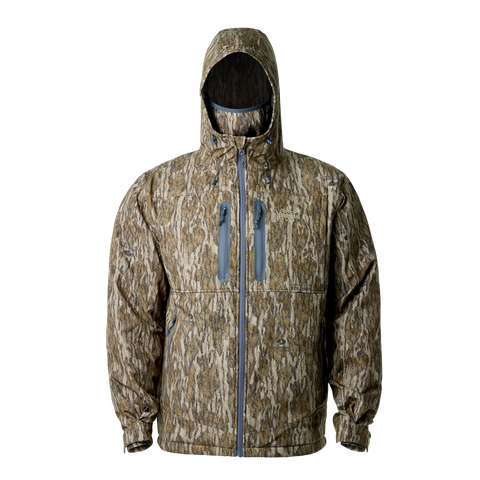
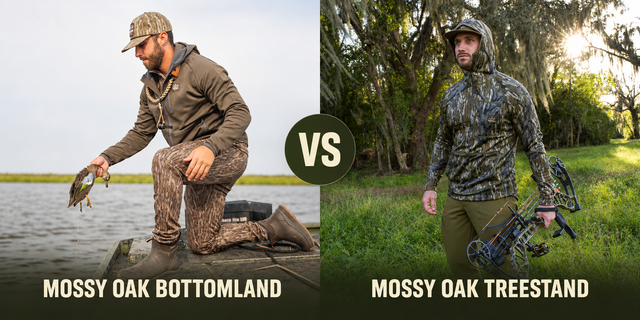
The DayBreak Insulated Jacket ($275) is the heaviest piece in the line: 160 grams of GoldPro insulation in the torso and 120 grams in the sleeves, a membrane between the fabrics for breathability, a windproof and highly water-resistant 4-way stretch shell, a retractable face mask, and fleece-lined hand-warmer pockets set high enough to clear chest waders. It comes in Mossy Oak Bottomland and Mossy Oak Treestand. The maker lists it as a premium outer layer built to layer underneath, so size it for a heavy mid layer.
For milder late-season days, the DayBreak Lightweight Jacket ($169) uses the same shell idea with 60 grams of insulation and no hood. If noise matters more than wind, look at the Drifter pieces: the Drifter Full Zip Jacket ($259) is a quiet, wind-resistant fleece shell with a waffle-fleece liner and a rear opening for a tree-stand tether. The Drifter Sherpa Shirt Jacket ($159) bonds quiet fleece to a sherpa liner in a snap-front cut.
Legs: the half most hunters underdress
Your legs sit still longer than anything else, and they are often in one layer of jeans or thin pants. That is the cheapest warmth you are not buying.
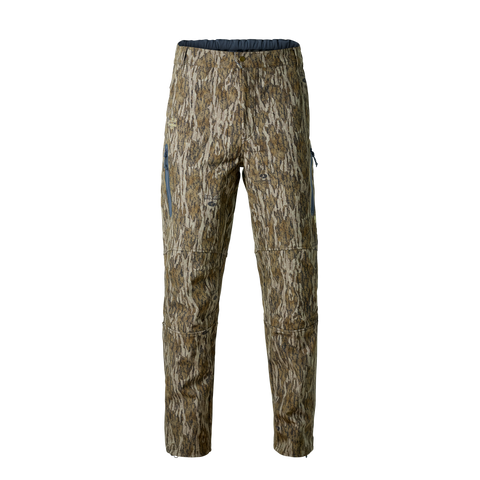
The DayBreak Bonded Fleece Pants ($229) bond a poly shell to micro fleece with a membrane between, with a water- and wind-resistant DWR coating, ankle drawcords and bottom zippers so they go on over boots. The Drifter Series Fleece Pant ($225) is the quiet-fleece version, light enough to wear alone in early season.
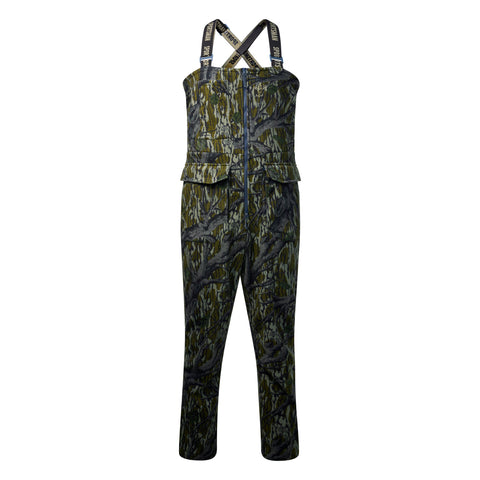
If you sit in real cold, bibs beat pants because they cover your lower back when you lean forward. The Drifter Bibs ($259) pair a quiet, water-resistant face with a waffle-fleece lining, full-length thigh zippers for getting them on over boots, and magnetic front pockets you can open without a sound.
The small pieces that decide whether you last
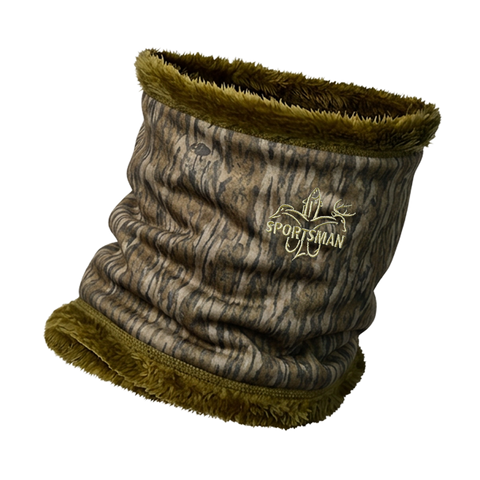
NIOSH's guidance calls out the face and neck, and on stand that is where the wind finds you. A Sherpa Neck Gaiter ($39.99) with a fleece lining, or the lighter Fleece-Lined Neck Gaiter ($29), closes the gap between collar and chin and pulls up over your face when the wind turns.
Your feet are the other weak point, and they deserve their own decision. Our breakdown of 400 vs 1,200 vs 1,400 gram insulated boots covers how much insulation a cold sit really needs. The full range is in our hunting boots collection. If your state requires blaze orange during gun season, check our blaze orange requirements by state before you rely on camo alone. A blaze orange cap is the simplest way to cover a head-cover rule.
Three systems by temperature
| Sit temperature | Base | Mid | Outer | Legs |
|---|---|---|---|---|
| 40s, light wind | Rambler Crew | Scout Hoodie | DayBreak Lightweight | Drifter Fleece Pant |
| 30s, steady wind | Bamboo Crew + Pant | Scout Hoodie or DayBreak Vest | DayBreak Insulated | DayBreak Bonded Fleece Pants |
| Teens to 20s, all-day sit | Bamboo Crew + Pant | Cold Front Sherpa Hoodie + DayBreak Vest | DayBreak Insulated | Drifter Bibs over the base |
These are starting points, not guarantees. Body size, metabolism and how far you walk in matter as much as the thermometer. Planning a long rut sit? Our guide to the all-day rut sit covers how to last 10 hours on stand. If you are deciding when to spend those hours, start with when the 2026 rut actually peaks.
What not to buy
Skip the single huge parka you wear from the truck. It is too warm to walk in and you will sweat in it. Skip cotton anywhere next to your skin. And skip an outer layer cut so close that it crushes the fleece underneath, because a compressed mid layer stops trapping air.
The short version
Walk in cool and dry. Wear a wicking base, carry the insulation, and put it on once you are settled. Choose the mid layer by temperature and the outer layer by wind. Do not forget your legs or your neck. For more cold-weather pieces, browse our jackets and vests, hoodies and base layers and hunting pants, or the full camo and whitetail deer hunting collections. For a late-season checklist by state, see our late-season deer prep for Wisconsin and Michigan.
Source: CDC/NIOSH, Cold Stress guidance for outdoor workers (layering, fabrics, hypothermia above 40°F). Product specifications from Sportsman Gear's published listings. Prices current at publication.