Quick answer: the best hunting dog breed for each job
For waterfowl, a field-bred Labrador Retriever suits most hunters, and a Chesapeake Bay Retriever handles the coldest open water. For upland birds, pick a German Shorthaired Pointer for versatility, a Brittany or English Springer Spaniel for tight cover, or an English Pointer for big country. For blood tracking, a wirehaired Dachshund or Bavarian Mountain Hound. If you hunt several species with one dog, the versatile continental pointers — GSP, German Wirehaired Pointer and Pudelpointer — are the strongest single choice.
Hunting dog breeds compared
| Breed | Best for | Cold-water ability | Range | Handler level |
|---|---|---|---|---|
| Labrador Retriever | Waterfowl, all-round | Excellent — dense double coat | Close | Beginner-friendly |
| Chesapeake Bay Retriever | Icy open water, divers | Best on this list — oily double coat | Close | Experienced |
| German Shorthaired Pointer | Versatile: upland, some water, tracking | Limited — short coat | Medium to wide | Active owner |
| German Wirehaired Pointer | Ducks and pheasants the same day | Good — harsh wiry coat | Medium | Active owner |
| Pudelpointer | Versatile, with an off switch indoors | Good | Medium | Active owner |
| English Springer Spaniel | Close-flushing upland, heavy cover | Moderate | Very close | Beginner-friendly |
| English Pointer | Big-country wild quail and pheasant | Poor — single coat | Very wide | Experienced, needs land |
| Brittany | Tight grouse and woodcock; house dog | Moderate | Close | Beginner-friendly |
| Boykin Spaniel | Southern doves, small-boat work | Moderate; heat-tolerant | Close | Beginner-friendly |
| Wirehaired Dachshund | Blood tracking wounded deer | Weatherproof coat | Leashed tracking | Moderate |
| Bavarian Mountain Hound | Blood tracking in steep country | Dense coat | Leashed tracking | Experienced |
| Bloodhound | Cold-trail recovery, hours-old sign | Short coat | Leashed tracking | Specialist |
The rest of this guide explains how to choose between them — because the right answer depends far more on your climate, your ground and your household than on any breed ranking.
Here is the mistake I watch people make every single spring: they fall for a dog. A buddy's chocolate Lab dropped a rooster at his feet, or a silver pup blew up their feed, or a breed just looks like a hunting dog should look — and eight weeks later there is a puppy in the kitchen that was bred for a job the owner does not actually do. Coat, drive, temperament, range: all wired for one kind of hunting, in one kind of country, for one kind of handler. Get that match right and the dog does half your thinking for you. Get it wrong and you spend the next decade apologizing to a great animal for a decision you made on looks.
So before we talk breeds, let's talk about you. The best hunting dog is not the flashiest one on the list below. It is the one that fits how you actually hunt, the climate you hunt in, and the life the dog goes home to when the truck is unloaded.
Diagnose before you shop: three honest questions
1. What do you actually hunt — and how often? Not what you dream about. If you shoot ducks fourteen days a year and chase pheasants over Thanksgiving, you need a versatile dog, not two specialists. If you live and die by flooded timber, get a water dog and stop apologizing for it. Be honest about days afield, because a hard-charging field-bred dog that hunts six times a season and sits in a crate the rest of the year is a behavior problem waiting to happen.
2. What is your climate and terrain? A single-coated pointer that is glorious on 70-degree Georgia quail ground will shiver and quit in an Iowa December marsh. Coat is not cosmetic — it is cold-water insulation and briar armor. Match it to the worst conditions you will ask the dog to work in, not the average.
3. Where does the dog live, and who trains it? A big-running English Pointer in a third-floor apartment is a cruelty to you both. An independent, one-person breed handed to a first-timer who wants a soft, forgiving gun dog is a mismatch nobody enjoys. Read the temperament honestly, then read yourself honestly.
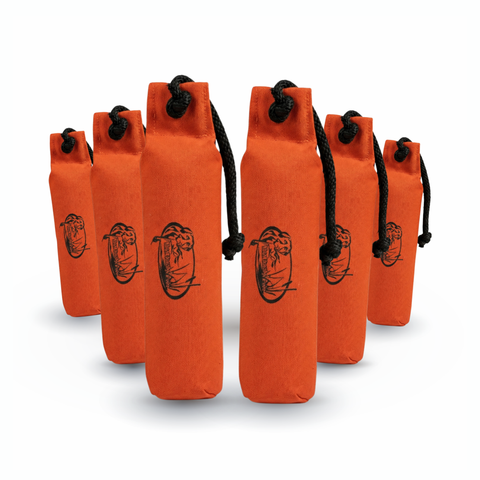
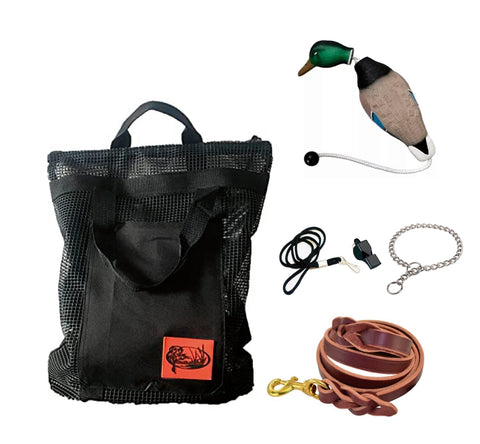
Answer those three and the list below sorts itself. Whatever you pick, start the foundation early — a dog training kit with a whistle, lead and mallard dummy and a set of canvas retrieving bumpers will do more for a young dog in its first year than any pedigree will.
Waterfowl dogs: coat first, drive second
Duck and goose work is the harshest environment we ask a dog to perform in: ice water, long swims, heavy cover, and a dog sitting wet in a blind for hours between flights. Coat and cold tolerance are the price of admission. Drive and biddability are what get the bird back.
Labrador Retriever. The Lab is the most popular sporting dog in America and has been for decades — the French Bulldog passed it as the overall most-registered AKC breed a few years back, but for actual hunting, the Lab still sits on the throne. That popularity is earned: a dense double coat with an insulating undercoat, an otter tail that works like a rudder, a genuine drive to retrieve, and a soft, biddable temperament that makes them the most trainable choice for most people. Here is the catch nobody tells the first-timer — "Labrador" now covers two very different dogs. Field-bred (American) lines are lean, hot, and built to hunt. Bench or show lines are heavier, calmer, and often carry far less birdiness. If you want a gun dog, buy from proven hunting lines and meet the parents. Weight runs roughly 55 to 80 pounds. Skip the "rare" color marketing; a working pedigree matters, coat color does not.
Chesapeake Bay Retriever. The toughest cold-water dog on this list, bred right here on the Chesapeake to break ice all day and do it again tomorrow. The Chessie's coat is the tell: a dense, wavy, oily double coat that sheds water and shrugs off cold that makes a Lab think twice. Temperament is the trade — a Chessie is more independent, more protective, and more of a one-person dog than a Lab. That is not a flaw, it is the breed doing its job, but it means a Chessie needs an experienced, consistent handler and early, non-negotiable obedience. Under-train one and you will have a strong-willed 70-pound dog making its own decisions. In the right hands, nothing on public-water divers works longer or complains less. One piece of kit worth sourcing before the season: a fitted canine flotation vest. We do not stock them — buy one from a dedicated dog outfitter — but even a strong swimmer gets hypothermic and cramps in 34-degree water, and the flotation buys you time on a long blind retrieve.
German Wirehaired Pointer & Pudelpointer. If you want one dog that hunts ducks in the morning and pheasants in the afternoon, this is where you look. The GWP's harsh, wiry, water-resistant coat handles cold and briars, and the breed carries a real retrieving drive on top of its pointing instinct. The Pudelpointer — a pointer-poodle cross bred purely for versatile function, not the show ring — is arguably the sleeper pick of the versatile world: coat, nose, water, and an off switch in the house. Neither is as specialized in icy water as a Chessie, but for the hunter who does a little of everything, the compromise is worth it.
Shop the dog training lineup for the whistles, bumpers, and scent kits that turn a promising pup into a finished waterfowl dog.
Upland bird dogs: range and biddability
Upland is a spectrum. On one end, big-country wild-bird hunting rewards a wide-ranging dog with a huge nose. On the other, tight grouse and woodcock cover demands a dog that works close enough to shoot over. Pick the wrong end of that spectrum for your ground and you will spend the season either walking to a point a quarter-mile away or watching a big-running dog bust birds you never had a chance at.
German Shorthaired Pointer. The most versatile hunting dog on the planet, and the honest answer for most multi-species hunters. A GSP points upland birds, retrieves ducks, will track a wounded deer, and runs all day on a short, easy-care coat. The coat is also the limitation — it is not built for prolonged icy water the way a Chessie's is, so if hard-water divers are your whole life, look elsewhere. The real thing to understand about a GSP is the engine: this is a high-drive, high-energy athlete that needs a job. Give one a task and a few miles a day and it is a dream. Leave it under-exercised in a suburban backyard and it will eat the backyard. For scent-conditioning a young pointer on birds you can't always get in front of, an upland scent kit lets you build birdiness in the off-season.
English Springer Spaniel. The classic close-working flusher. A Springer quarters tight in front of the gun, busts pheasants and grouse out of heavy cover, and brings back everything you drop with a natural retrieve. Compact, enthusiastic, and biddable enough for a first-time trainer — with the same field-versus-bench warning as the Lab. Buy from field-trial or hunting lines if you want a dog that hunts, not a couch companion with a docked tail. If you hunt cattail sloughs and thick edges more than open country, a good Springer is hard to beat.
English Pointer. When bird-finding on wild quail or running pheasants is the entire point, few breeds touch the Pointer's nose, range, and rock-solid staunch point. These are big-running dogs bred to cover serious country and find birds a close-working dog would walk past — the traditional choice for open-country quail across the South and the plains. Understand what you are signing up for: a Pointer needs room, miles, and disciplined whistle-and-collar handling. This is not the dog for tight grouse woods or a small yard. Give it country and a job, and it is a bird-finding machine.
Brittany. The pointing breed for the hunter who wants a dog that works close, fits the house, and doesn't need forty acres to stay sane. Smaller than most pointers at roughly 30 to 40 pounds, biddable, and naturally inclined to hunt within gun range, the Brittany shines in tight grouse and woodcock cover and handles the close-quarters work of mixed-bag upland extremely well. For a lot of walk-in and public-land hunters, it is the most practical bird dog on this whole list.
Boykin Spaniel. Worth a mention for the Southern hunter: a compact, brown flushing-and-retrieving spaniel bred in South Carolina to work out of a small boat for doves, ducks, and turkeys. Heat-tolerant, boat-sized, and friendly — a genuinely useful little dog if your season leans toward doves and small-water fowl.
Blood-tracking dogs: the cold-nose specialists
After the shot, a tracking dog is the difference between a recovered animal and a long, sick walk back to the truck. This is scent work of a different kind — trailing hours-old, cold blood over ground that may have been rained on and walked across. Leashed tracking dogs are now legal for big-game recovery in the large majority of states, though a handful still restrict it, so confirm your state's regulations before the season (rules change; verify locally).
Wirehaired Dachshund. Do not laugh at the size. Long a European standard and now a fixture in American deer camps, the wirehaired Dachshund brings a low nose, a weatherproof coat, and a tenacity that borders on stubborn — exactly what a cold trail rewards. The low-slung build keeps the nose on the ground where the scent is. Buy from proven tracking lines, not pet-store Dachshunds; the working instinct is real but it has to be there in the pedigree.
Bavarian Mountain Hound. A purpose-built blood-tracking hound developed in Germany specifically to trail wounded big game across steep country. Increasingly seen with serious whitetail and mountain hunters in North America, it pairs a superb cold nose with the athleticism to work terrain a Dachshund can't. Like most of the dedicated trackers, it is a driven, one-handler dog that wants a job — this is a working partner, not a casual pet.
Bloodhound. The most developed nose in dogdom, capable of following a trail many hours old. The trade-offs are real: it is a big, powerful, drooly dog that is more a specialized recovery tool than an everyday hunting companion. For a dedicated recovery operation it is unmatched; for most hunters, it is more dog than the job needs.
One honest note: you may not need a dedicated tracker at all. A well-bred versatile dog — a GSP, GWP, Lab, or a good cur — can be trained to trail wounded game and cover the recovery work for the hunter who doesn't want a single-purpose hound. Whatever tracks for you, carry a compact canine first-aid kit in the pack. That is another category we do not stock, and it is worth buying properly rather than improvising: cut pads, barbed-wire snags and thorn punctures happen on recovery trails in the dark, and a stapler, vet wrap and a way to flush a wound will get your dog home.
The mistakes I see most
Buying the look, not the lines. "Lab," "Springer," and "Pointer" each describe two nearly different dogs — field-bred hunters and bench-bred pets. A show pedigree with no birds behind it will fight you the whole way. Meet the parents, watch them work, and buy from proven hunting lines.
Chasing a trend or a color. Viral breeds and "rare" coat colors sell puppies; they do not point birds or break ice. Silver Labs, exotic crosses, whatever is hot this year — none of it changes what the dog was bred to do. Function over fashion, every time.
Ignoring your own climate. A single-coated dog in a northern marsh, or a heavy double-coated dog worked hard in Southern heat, is a dog set up to fail. Match the coat to the conditions.
Under-working a high-drive dog. The number one reason good gun dogs become bad house dogs is a hard-charging animal with no outlet. If you only hunt a dozen days a year, either pick a lower-drive breed or commit to daily training and exercise. Keep your gear organized and truck-ready in a waterproof floating dry bag so "no time today" never becomes the excuse.
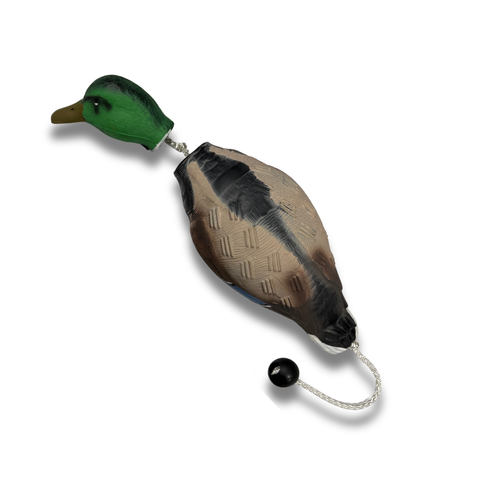
Rushing the first year. The foundation you build — or skip — in the first twelve months follows the dog for life. Slow is smooth, smooth is fast. A mallard-shaped training dummy for a duck prospect, or scent-conditioning for a bird dog, teaches the right picture before the pressure of a real hunt ever arrives.
Matching it up: a quick read
Serious waterfowler, cold water, few other species: Labrador from field lines, or a Chesapeake if you want maximum cold tolerance and can handle the temperament.
One dog, many species, mixed bag: German Shorthaired Pointer, German Wirehaired Pointer, or Pudelpointer. Hard to beat for the hunter who does a little of everything.
Tight grouse and woodcock cover, want a house dog: Brittany or a field-bred Springer.
Big-country wild birds, plenty of room and time: English Pointer.
Southern dove and small-water fowl, small boat: Boykin Spaniel.
Losing deer after the shot: add a wirehaired Dachshund or Bavarian Mountain Hound — or train the versatile dog you already own to trail.
Your move this week
Pick the one line above that describes your season honestly. Then do the unglamorous work: call two breeders of proven working lines, ask to see the parents hunt (a real breeder will offer before you ask), and get on a waitlist — good litters are spoken for months out. While you wait, start the foundation. Basic obedience, a whistle, and short, happy bumper sessions cost you nothing and put you a full season ahead. Get the match right, put in the first year, and you will spend the next ten hunting behind a dog that fits your ground, your climate, and your life. That is worth far more than a pretty pedigree.
Planning to take the dog out of state? Before the season opens, run through our off-season gear maintenance checklist so your equipment is as field-ready as your dog.
Frequently Asked Questions
What is the best hunting dog breed?
There is no single best breed — there is a best breed for your hunting. For waterfowl, a field-bred Labrador Retriever; for the coldest water, a Chesapeake Bay Retriever. For upland birds, a German Shorthaired Pointer if you want versatility, a Brittany or English Springer Spaniel for close cover, an English Pointer for big country. For blood tracking, a wirehaired Dachshund or Bavarian Mountain Hound. Match coat to your climate, range to your terrain, and temperament to your experience.
What is the best hunting dog breed for a first-time owner?
A field-bred Labrador Retriever is the most forgiving first hunting dog. Labs are eager to please, easy to train, and versatile enough for waterfowl, upland, and even basic blood tracking. Their temperament also makes them excellent family dogs in the off-season. Just buy from hunting lines, not show lines, if you actually want a gun dog.
Can one dog hunt waterfowl and upland birds?
Yes. Versatile breeds like the German Shorthaired Pointer, German Wirehaired Pointer, and Pudelpointer were developed specifically for this. Expect small trade-offs in specialty performance — a versatile dog is not as cold-hardy as a Chesapeake or as wide-ranging as an English Pointer — but a good one will retrieve ducks, point pheasants, and trail a wounded deer.
How do I know if a puppy comes from real hunting lines?
Ask to see the parents work, or ask for proof of hunting titles, field-trial placements, or hunt-test passes in the pedigree. A serious breeder of working dogs will offer this before you ask. If a breeder talks more about coat color or looks than about birds and drive, keep looking.
When should I start training a hunting puppy?
Basic obedience and gentle exposure to gun sounds should start at 8 to 12 weeks. Formal retrieving and field work generally begin around 4 to 6 months. The first year is foundational — rush it and you will fight bad habits for the dog's entire life.
Do I need a tracking dog if I bowhunt?
For serious bowhunters, it is one of the best investments you can make. Blood-trailing breeds like wirehaired Dachshunds and Bavarian Mountain Hounds can recover deer that would otherwise be lost, and a well-trained versatile dog can do the job too. Leashed tracking dogs are now legal for big-game recovery in the large majority of states — check your local regulations before the season.