Marlin's newest lever gun is the first one ever chambered in 10mm Auto: a stainless 1894 Trapper with a 16.1-inch barrel, a 10-round tube, a threaded muzzle and Skinner peep sights, at $1,599 MSRP. Smith & Wesson's 1854 Stealth Hunter brought a modern .45-70 to the same shelf. And the ammunition makers are back to building loads specifically for lever actions, which is the surest sign a category is real rather than nostalgic.
We have not shot either rifle. What follows is built from the manufacturers' specifications and the published range reviews, and it is meant to answer one question: which lever gun actually fits the deer hunting you do?
The constraint that decides it: distance
Every lever-gun conversation should start here. Lever actions are short, fast-handling and quick to a second shot, and almost all of them are chambered for cartridges that lose speed fast. That makes them superb inside 150 yards and progressively worse beyond it. If your deer hunting is timber, swamp edges, Northeast hardwoods or a Texas brush blind, that is a feature. If you hunt bean fields with 300-yard edges, it is a reason to buy something else.
Marlin 1894 Trapper in 10mm Auto
The specs: 33.25 inches overall, a 16.1-inch cold hammer-forged stainless barrel with a 1-in-16 twist, threaded 5/8x24 and capped, a 10-round tubular magazine, laminate stock, and a receiver drilled for scope mounts with an offset hammer spur for scoped use. The 10mm Trapper lists for $1,599, about $100 more than the other Trappers.
The honest framing for deer: the 10mm Auto is a pistol cartridge. A 16-inch barrel adds velocity over a handgun, but it is still a pistol round with a pistol bullet's trajectory, so treat the Trapper as a short-range deer rifle. Lever actions are also pickier about bullet shape and overall length than semi-autos, so test the specific load you plan to hunt with for feeding before the season, and sight it in on paper targets rather than a dirt bank, so you can see where the group actually lands. The case for it is the obvious one: a light carbine that shares ammunition with a 10mm sidearm, for someone who wants one cartridge in bear country or on a close-range deer stand. The case against is that for a dedicated deer rifle, there are lever-gun cartridges that do more.
Smith & Wesson 1854 Stealth Hunter in .45-70
The .45-70 is the opposite end of the lever-gun world: a heavy, wide bullet at modest speed that has been killing big game since 1873. The 1854 Stealth Hunter puts it in a modern package aimed at hunters rather than collectors. The .45-70 also pairs better with subsonic ammunition than almost anything else, because a 300-grain bullet still carries useful weight at about 1,000 feet per second. Federal's new subsonic line includes a 300-grain .45-70 load at that speed.
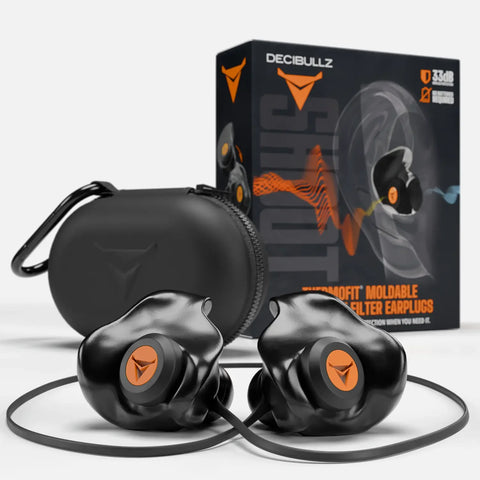
The tradeoff is recoil and trajectory. A .45-70 is a 150-yard deer rifle for most shooters, and it shoots like it. If you are sighting one in off a bench, wear filtered shooting plugs. A short-barreled .45-70 is loud in a way that teaches a flinch, and a flinch learned at the bench follows you to the stand.
The ammo shift behind the rifles
Lever-gun ammunition has quietly become a growth area. Hornady loads its American Whitetail Tipped line with FTX bullets in lever and straight-wall cartridges, listing the 165-grain .350 Legend at 2,200 fps. Barnes added straight-wall cartridges to its Harvest line. Federal's subsonic line covers .30-30 and .45-70. One caution: Winchester's new American Lever Range ammunition is marketed for range and practice shooting, not as a hunting load. Read the box.
If you hunt in a state that requires straight-wall cartridges for deer, check whether your lever gun qualifies before you buy it. Our straight-wall cartridge guide lists where they are required and which four we would look at first.
What to put on top
The temptation is to put a big scope on a lever gun. Resist it. A lever action's advantages, fast handling and a quick second shot, disappear under a heavy optic, and you do not need 12 power at 100 yards. A low-power variable is the right match.
Trijicon's Huron 1-4x24 with BDC Hunter Holds ($685) is built for exactly this kind of rifle: true 1x for close, fast shots, 4x when a deer stops at the edge of the cut, and holds for the drop you will see from a lever cartridge past 100 yards. The Ascent 1-4x24 is the same magnification with a target-style hold reticle. If your lever gun has a longer reach, a .30-30 or .35 Remington from a 20-inch barrel, the Huron 3-9x40 on a 1-inch tube keeps the weight down while giving you more magnification. Keep in mind that a BDC reticle's holds are calibrated to a velocity range; check where your load actually lands against them. The rest of what we carry is in hunting scopes.
On a 10mm Trapper, the Skinner peep sights that come on the rifle are a perfectly good answer to the scope question for shots inside 75 yards. A peep is fast, it does not fog, and it keeps the rifle as light as it was designed to be.
The short version
Buy the 10mm Trapper if you want a light carbine that matches a 10mm handgun and your shots are short. Buy a .45-70 if you want the most stopping power a lever gun offers and you are fine with recoil. Buy a .30-30 or .350 Legend lever gun if you want the most practical deer rifle of the three. Put a 1-4x on any of them. For context on where lever guns sit against this year's bolt guns, see our 2026 rifle price analysis, and for the cautionary end of rifle history, the worst hunting rifles of all time.
Sources: Field & Stream and Gun Digest reviews of the Marlin 1894 Trapper 10mm; all4shooters; American Hunter; Field & Stream 2026 ammunition coverage; Federal Ammunition.