Every December, a bottle of doe-in-heat gets opened on the promise of a "second rut." The biology says the second rut is real but small. The law says that in a growing list of states, the bottle itself can get you a ticket. Here is when December breeding actually happens, which states restrict natural deer urine and how, and how to choose between a certified natural estrus scent and a synthetic one before the late seasons arrive.
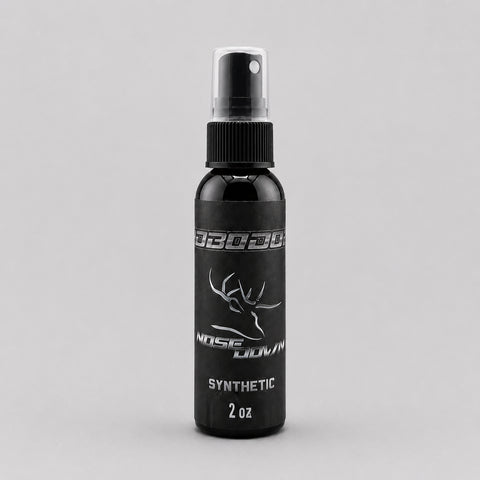
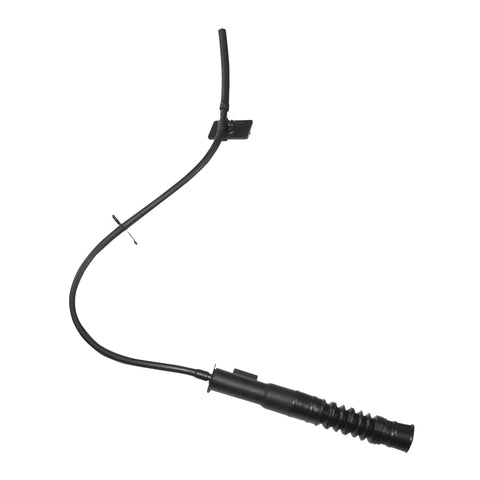
Gear that fits this hunt: the Killz Hands-Free Grunter for calling without a bottle, or Nose Down RoboDoe Synthetic Scent where real urine is restricted.
What the second rut actually is
A doe that isn't bred during her first cycle comes back into heat roughly 28 days later. Texas Parks and Wildlife's breeding study puts it plainly: a doe may attract bucks for about five days but is willing to breed for only about 24 hours, and if she isn't bred she generally cycles again in about 28 days.
The catch is how few does are left to recycle. The National Deer Association's Brian Grossman, a trained wildlife biologist, wrote last fall that in most of the country very few does go unbred in the first cycle. Much of the December flurry hunters notice is this year's doe fawns reaching the weight that lets them come into estrus, roughly 80 pounds for northern deer and around 70 for southern deer. The Kentucky Department of Fish and Wildlife Resources describes the same thing: a second, less intense breeding period around mid-December, with bucks that still chase and spar but don't get as crazy. The more does per buck in your area, the more second-rut activity you'll see.
So in the North, expect a smaller window about four weeks after your peak, not a repeat of November. Our 2026 peak breeding dates give you the starting point, and the buck-to-doe ratio research explains why some properties see more of it than others.
Where December is the main rut, not the second one
For a big slice of the South, December and January are the primary rut. TPWD's fetal study found the latest breeding in the state in South Texas, with peak breeding on December 16 in the eastern study area and December 24 in the west. The Trans-Pecos peaked December 8 and the western Edwards Plateau December 5.
Alabama is the extreme case. Because the state restocked deer from Arkansas, Georgia, Michigan, North Carolina, Ohio, Texas and Wisconsin, Wildlife and Freshwater Fisheries Director Chuck Sykes has said Alabama hunters can hunt a rut in November, December, January and February depending on the area. The WFF Rut Map on OutdoorAlabama.com, built from fetal collections, shows the expected window for your county.
| Area | Peak breeding | Source |
|---|---|---|
| Northern states (second rut) | About 28 days after your November peak; Kentucky biologists put it around mid-December | TPWD, Kentucky DFWR |
| South Texas Plains | Dec. 16 (east), Dec. 24 (west) | TPWD breeding study |
| Trans-Pecos | Dec. 8 | TPWD breeding study |
| Western Edwards Plateau | Dec. 5 | TPWD breeding study |
| Alabama | November through February, by area | Alabama WFF Rut Map |
Check this before you buy a bottle: natural urine rules
Chronic wasting disease prions are shed in urine, saliva and feces, and most commercial deer urine is collected from captive deer. That has pushed states into three camps. These are the rules as each agency or code states them; confirm your own state's current digest before you hunt.
Natural deer urine banned afield
- Virginia: illegal to possess or use products containing natural deer urine, gland secretions or other bodily fluids while hunting or scouting, since July 1, 2015.
- South Carolina: illegal to possess or use any deer excretion for hunting or scouting since 2019. Synthetics are allowed, and SCDNR says to assume a product is natural unless it is clearly labeled synthetic.
- Alabama: ADCNR banned natural deer urine products starting with the 2019-20 seasons. Synthetics are not affected.
Natural allowed only with the right certification on the label
- Tennessee: natural cervid urine is prohibited while hunting unless the label carries the manufacturer's certification that the facility meets TWRA's herd-certification, fencing and inspection conditions and tests each batch by RT-QuIC.
- Louisiana: allowed only from Deer Protection Program participants, RT-QuIC tested and labeled "CWD Not Detected." Synthetic urine labeled as synthetic is approved.
- Michigan: allowed only from manufacturers enrolled in the Responsible Hunting Scent Association or ATA Deer Protection Program, lab tested and clearly labeled as such.
- Mississippi: natural cervid urine has been unlawful for hunting since July 1, 2019, except certified product from facilities meeting the rule's ATA-protocol, import, testing, inspection and fencing conditions. Synthetics may be used.
Banned only in disease areas
- Pennsylvania: the Game Commission prohibits using or possessing natural urine-based attractants inside its CWD Disease Management Areas. If you're hunting the Dec. 26 flintlock season, check the DMA map first.
Option A: certified natural estrus scent
Where natural urine is legal, or legal with certification, this is the traditional choice for a December mock scrape or drag.
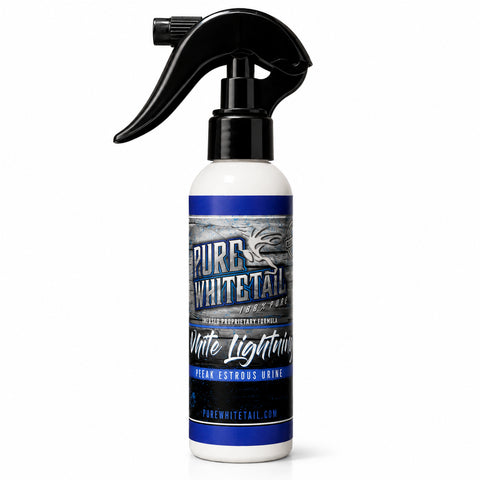
- Pure Whitetail White Lightning Peak Estrous, 4 oz ($34.99), also in a 2 oz bottle ($19.99). Pure Whitetail says it collects the urine at the peak of the doe's cycle, uses no additives or preservatives, and tests every batch. Supply is seasonal.
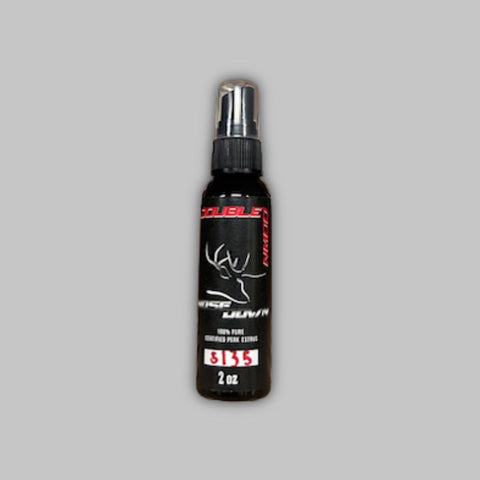
- Nose Down Double Down Certified Estrus Urine ($15.99, 2 oz). The listing describes it as lab tested from each collection and DPP certified for CWD low risk.
The honest caveat: certification wording differs by state. Tennessee, Louisiana, Michigan and Mississippi each describe what the label must show, and only the bottle in your hand can prove it. Read the label against your state's rule before it goes in your pack. In Virginia, South Carolina and Alabama, skip natural urine entirely.
Option B: synthetic doe-in-heat
Synthetics are expressly allowed in every state above whose rule mentions them.
- Nose Down RoboDoe Synthetic Scent ($10.99, 2 oz spray). Nose Down's 100% synthetic version of doe-in-heat, made for scrapes, drag lines and scent dispersal.
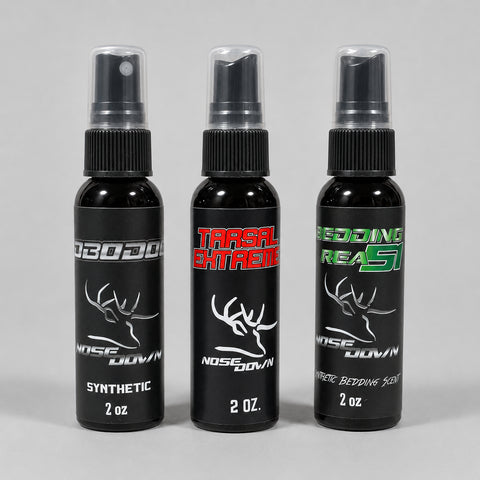
- Nose Down Synthetic Slam Deer Scent Combo ($32). A set of synthetic scents for hunters in CWD-regulated areas who still want scent working around a stand.
Who it fits: anyone hunting Virginia, South Carolina or Alabama, anyone inside a Pennsylvania DMA who still wants scent (read the digest's wording on synthetics there first), and anyone who doesn't want to parse certification language at the truck.
The call works without a bottle
A grunt call raises none of the scent questions. The Killz Hands-Free Grunter ($24.98) clips to your outer layer so your hands stay on the bow or rifle. An adjustable O-ring covers dominant buck, buck, doe and fawn settings, and Killz says the inhale-activated reed won't stick in heat or freeze in cold, which matters on a December sit.
How to hunt December with either one
- Hunt the does and the food. Kentucky's biologists say December deer concentrate on feeding and building weight; where there are does, there are bucks.
- Don't camp on a scrape. NDA notes nearly 85% of scrape activity happens at night. Set up between scrapes and bedding cover, as our northern scrape research piece lays out.
- Dawn and dusk still rule. NDA's review of GPS-collar studies found movement peaks at first and last light even in the rut.
More options are in our scent control and deer lures and game calls collections.
FAQ
When is the second rut?
About 28 days after the peak of breeding where you hunt. Kentucky biologists put it around mid-December for areas that peak in mid-November. It is usually far less intense than the first rut.
Which states ban natural deer urine?
Among the states we checked, Virginia, South Carolina and Alabama ban natural deer urine for hunting. Tennessee, Louisiana, Michigan and Mississippi allow it only with specific certification on the label. Pennsylvania bans it inside CWD Disease Management Areas. Other states have their own rules, so check your digest.
Is synthetic doe estrus legal everywhere?
Every agency rule cited here either allows synthetics or doesn't restrict them, but read your own state's wording, especially inside disease management zones.
Venator has not field-tested these scents or calls. Picks are based on the manufacturers' descriptions, chosen by people who chase whitetail. Breeding dates are from TPWD's statewide breeding study, Kentucky DFWR and Alabama WFF; scent rules are from Virginia DWR, SCDNR, ADCNR, TWRA, LDWF, Michigan DNR, the Pennsylvania Game Commission and Mississippi Administrative Code 40-2-2.8, checked Nov. 23, 2026. Rules change; confirm your state's current regulations before you hunt.
Always confirm all regulations with your state's wildlife agency before you hunt or fish. Seasons, limits and rules can change, sometimes mid-season.