Updated October 30, 2026: added why bismuth and tungsten are scarce this season, what is still on shelves, and copper as a new option.
A box of Federal Black Cloud steel was listed at $23.94 for 25 shells on October 18, about 96 cents a shot. A 10-round box of Apex TSS listed at $52.49 the same day, about $5.25 a shot. Kent Bismuth sits between them, starting around $2.40. Every one of those is legal for ducks, and every one of them kills ducks. The question is what the extra money buys, and the answer is a single number: density. This season there is a second question too: whether you can find bismuth or TSS at all. Both metals are in short supply, and the reasons are explained below.
Why density is the whole story
Lead was banned for waterfowl nationwide in 1991, and everything since has been an attempt to replace it. A pellet's ability to carry energy and penetrate comes down to how much mass it packs into its diameter. A dense pellet keeps its speed longer and pushes through feathers and bone more easily.
| Shot | Density (g/cc) | Vs. lead |
|---|---|---|
| Steel | ~7.9 | About 30% lighter |
| Copper (new for 2026) | ~8.9 | About 21% lighter |
| Bismuth | ~9.6 | About 15% lighter |
| Lead (banned for ducks) | 11.3 | — |
| Tungsten Super Shot (TSS) | 18 | About 60% heavier |
Winchester rates its Last Call TSS at 18 g/cc and describes it as 125 percent heavier than steel and 85 percent heavier than bismuth, according to its product announcement. Steel, copper and bismuth figures are standard material densities.
What that density does to pellet size
This is where TSS stops looking like a luxury and starts looking like a different tool. Because each TSS pellet is so heavy for its size, you can shoot much smaller shot and get the same penetration potential, which means far more pellets in the pattern.
| Load | Pellets per ounce | Penetration index* |
|---|---|---|
| #2 steel | ~125 | 1.18 |
| #3 steel | ~153 | 1.10 |
| #4 bismuth | ~157 | 1.25 |
| #9 TSS | ~359 | 1.44 |
| #7 TSS | ~184 | 1.80 |
*Our calculation: density multiplied by pellet diameter, a rough stand-in for how a pellet penetrates relative to others. Pellet counts are calculated from standard shot diameters and densities; they match Federal's published TSS counts within about one percent.
Read the #9 TSS row against the #2 steel row. The tiny TSS pellet scores higher on penetration potential and puts nearly three times as many pellets in each ounce. Federal makes the same point in its own terms: it says a #9 TSS pellet carries at least as much penetrating energy as a #5 lead pellet at all ranges, and its testing put about 350 #9 TSS hits in a 10-inch circle at 40 yards from a 1 3/4-ounce load, against 100 to 130 for #5 lead, per Federal's Hook & Barrel explainer.
Why bismuth and TSS are so hard to find this season
The density math has not changed. What changed is the supply of the two metals that beat steel, and it changed fast. Both come overwhelmingly from one country, both are now treated as strategic materials, and shotshell makers are small buyers competing with much bigger industries. Here is what happened and why it will not fix itself quickly.
One country, two metals
China mined about 67,000 of the world's roughly 85,000 metric tons of tungsten in 2025, close to 80 percent, according to the U.S. Geological Survey. The United States has not mined tungsten commercially since 2015. Bismuth is even more concentrated: China produced about 14,000 of roughly 16,000 tons worldwide in 2025, around 88 percent, and the U.S. has not refined primary bismuth since 1997 and imports about 92 percent of what it uses, per the USGS bismuth summary.
On February 4, 2025, minutes after a new U.S. tariff on Chinese goods took effect, Beijing put export licensing on tungsten, bismuth, tellurium, indium and molybdenum, Reuters reported. It is not a ban, but every shipment now needs government permission. In December 2025 China went further and said only 15 companies would be allowed to export tungsten in 2026 and 2027, according to Industrial Info Resources, citing Reuters. A pause China granted on some other mineral controls in late 2025 left the tungsten and bismuth rules in place, as the law firm Clark Hill noted.
Why bismuth can't simply be mined faster
This is the part most hunters miss. Almost nobody mines bismuth for its own sake. It is mainly a byproduct of refining lead ore, and in China and Vietnam also of tungsten ore; only one mine in China produces it as the main product, and Bolivia's Tasna mine has been idle since 1996, per the USGS. So when the bismuth price jumps, nobody can open a bismuth mine to meet it. Output rises only if lead and tungsten output rise, and the last U.S. primary lead smelter closed at the end of 2013.
Shotshells also compete with steady, price-insensitive buyers. Bismuth goes into lead-free plumbing brass (demand jumped after the 2014 federal "lead-free" drinking-water rule), solders, pharmaceuticals and cosmetics. When supply tightens, those buyers keep paying, and a waterfowl load is the easy product to drop.
The price shows it. Rotterdam bismuth averaged $5.40 a pound in 2024 and about $20 in 2025, the highest annual average on record, with a monthly peak of $34.22 in March 2025, the month after the export controls, per the USGS. After the controls took effect, China shipped no export-controlled bismuth metal to the United States, according to an analysis by the Silverado Policy Accelerator.
Why tungsten got pulled toward the military
TSS pellets are about 95 percent tungsten, bound with nickel and iron, as the Daily Gazette explained. The raw material behind them is ammonium paratungstate, or APT. Rotterdam APT roughly doubled during 2025, from $331 to $675 per metric ton unit (USGS), then ran to about $3,185 by April 2026, up nearly 900 percent in 12 months, per Industrial Info Resources, citing research firm The Oregon Group. By late October, Outdoor Life put APT at roughly six times its June 2025 level, with Chinese prices well off their peak but European prices only about 10 percent lower.
Defense demand is the other half. Tungsten goes into armor-piercing rounds, cutting tools and semiconductors, and starting January 1, 2027, U.S. defense contractors may not deliver tungsten powder or tungsten heavy alloy that was mined or processed in China, Russia, Iran or North Korea, under a Pentagon rule summarized by the law firm Crowell & Moring. That sends defense buyers after the same limited non-Chinese tungsten that U.S. shot makers would use, and new mines take years to permit and build.
What it did to shotshells
- Bismuth: Boss Shotshells, one of the best-known bismuth loaders, dropped its bismuth loads in 2025. Founder Brandon Cerecke told Split Reed that the company's "metal supply dried up almost overnight." Outdoor Life reports that many pure bismuth loads from Remington and Hevi are discontinued, and Winchester's Jimmy Wilson told the magazine bismuth still can't be bought at any reasonable price. Federal Premium Hevi-Bismuth is still made, at about $2.40 a round for 12-gauge No. 4s at big-box stores.
- Tungsten: Federal's 20-gauge Black Cloud TSS is discontinued, Hevi XII is unavailable, and Winchester called TSS waterfowl loads essentially dead for itself this season on cost, per Outdoor Life's October 2026 report. Apex Ammunition says it has tungsten in-house and is still loading full TSS and blends, with waterfowl prices 15 to 27 percent above 2025.
- Lighter "tungsten": some makers have switched to slightly less dense tungsten pellets (about 17 g/cc instead of 18) to hold prices down, Field & Stream reported. Read the box: "tungsten" is no longer a guarantee of 18 g/cc.
What is still on the shelf
- Blends. Mostly steel with some heavier shot mixed in: Browning Wicked Blend (about 30 percent bismuth, around $40 a box), Hevi Hammer (about 15 percent bismuth) and Hevi Hitter (20 percent tungsten), per Outdoor Life. They stretch scarce metal across more shells, so they cost less and are easier to find.
- Copper. Boss's CuProX copper loads were approved by the U.S. Fish and Wildlife Service this summer and run about $2.15 a shell in 20-round boxes. Copper sits between steel and bismuth on density, and Boss says it is soft enough for older guns. Copper is not cheap either: Wilson put it above $6.50 a pound, about half again what it cost two years ago.
- Steel. Every major maker is pushing stacked steel this year, and Wilson's summary was that this will be the season of steel.
What to do about it: if you rely on bismuth or TSS, buy what you need for the whole season as soon as you see it, because many of these loads are leftover inventory that will not be restocked. Pattern any substitute load before you hunt, since a blend or a 17 g/cc tungsten pellet will not pattern like the load it replaced. And if a box costs far more than this article's numbers, check whether it is a blend or a full load before you pay for it.
So which one?
Steel is the sensible default for decoying ducks inside 35 yards, and on cost it is not close. If ducks are finishing in the hole, a good steel load in #2 or #3 kills them, and at under a dollar a shell you can afford to practice. In a year when mallards are down 11 percent, how well you call and hide will decide more than what is in the shell.
Bismuth is the answer for older guns. Bismuth is soft, closer to lead in how it behaves in a barrel, which makes it the usual choice for vintage doubles and fixed-choke guns not rated for steel. Check your gun maker's guidance before you shoot steel or tungsten through anything old. This season, buy it when you see it; if you can't find it, ask your gun maker whether copper loads are approved for your gun.
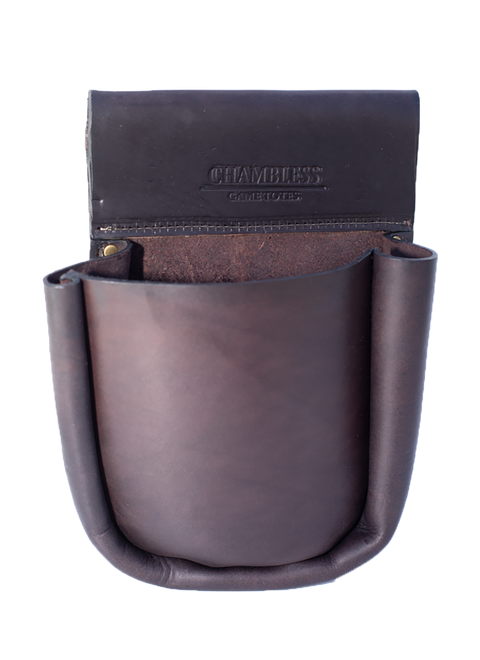
TSS earns its price in three situations: when birds hang at the edge of range, when you are shooting a 20 gauge or smaller and want 12-gauge performance, and when you are hunting late-season birds that will not commit. It is also harder than steel, so follow the ammo and choke maker's recommendations. With supply this tight, plenty of hunters carry a handful of TSS for the end of the hunt and shoot steel for the rest; a leather shell bag on the belt makes it easy to keep the two separate.
We have not patterned these loads. The densities, prices and pellet data come from the manufacturers, retailers and publications named, and the index and counts are our labeled arithmetic. Pattern your own gun with your own choke before the season; patterns vary more gun to gun than most hunters expect.
The rest of the setup
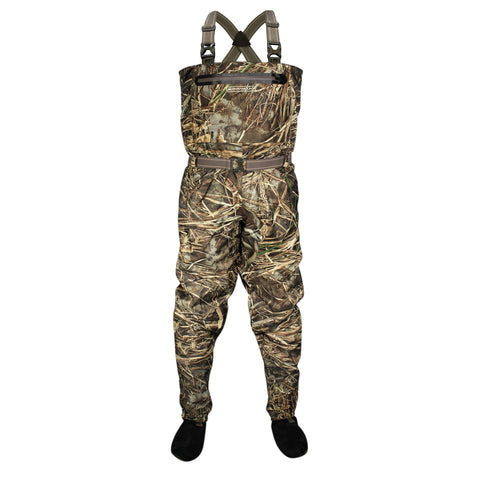
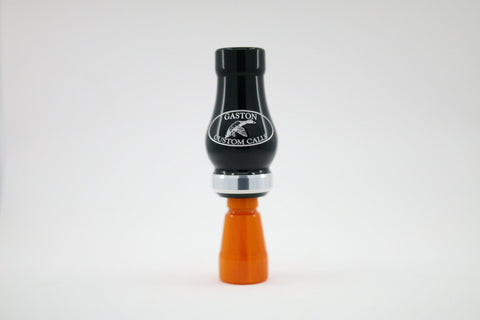
The shell is one variable. A call you can actually run matters more on a slow day, and our single-reed call guide walks through that. Wet-weather hunts are a gear problem first; see our wet-weather guide. Breathable waders like the Paramount Deacon's Marsh and the rest of our waterfowl gear are where the cost per hunt actually adds up. And if the shell prices above surprised you, here is why ammo costs what it does in 2026.
Prices listed by Midwest Gun Works (Federal Black Cloud 12 ga 3" 1 1/4 oz #3, sold out at time of check), Kinsey's (Apex TSS Z-Series 12 ga 3" #7.5, MAP) and Molly's (Kent Bismuth 12 ga 3" 1 3/8 oz #4, starting price) on October 18, 2026. Supply figures: USGS Mineral Commodity Summaries 2026 (tungsten, bismuth). Shotshell availability: Outdoor Life (October 22, 2026), Split Reed and Field & Stream.